Editorial Note:
In the summer of 2025, Samadhwani began a Village History and Cultural Documentation Internship Program, asking students to research and document the histories of their own villages. In that first year, around 40 students from schools and colleges across Odisha, and from Jamshedpur Women’s University in Jharkhand, took part and did beautiful documentation work. In 2026, we tried to go further. More than 170 students joined this year’s internship program. Students of the English, Hindi, Bengali, Sanskrit, and Urdu departments of Jamshedpur Women’s University came forward together, and they documented their own villages. Most of them researched and recorded the history, culture, education, old festivals, and food of their own villages.
These students are doing more than documenting their villages. They are protecting the culture of Seraikela-Kharsawan, Jamshedpur, and other regions of Jharkhand. We hope the Government of Jharkhand will take note of this students’ initiative. We are grateful to Jamshedpur Women’s University for letting its students take part. If every university and college ran a campaign like this, India’s history would be written by its own young people. This is more than history. It is a statement of people’s experience. It is a matter of joy and pride for any state or country when its young people write its history and, thinking about how to carry the nation forward, begin to give their own work to it. The program no longer belongs only to Odisha or India. Against this background, we publish Jasmeen’s essay here. We ask you to read it and share your thoughtful opinion. – Swayamprava Parhi

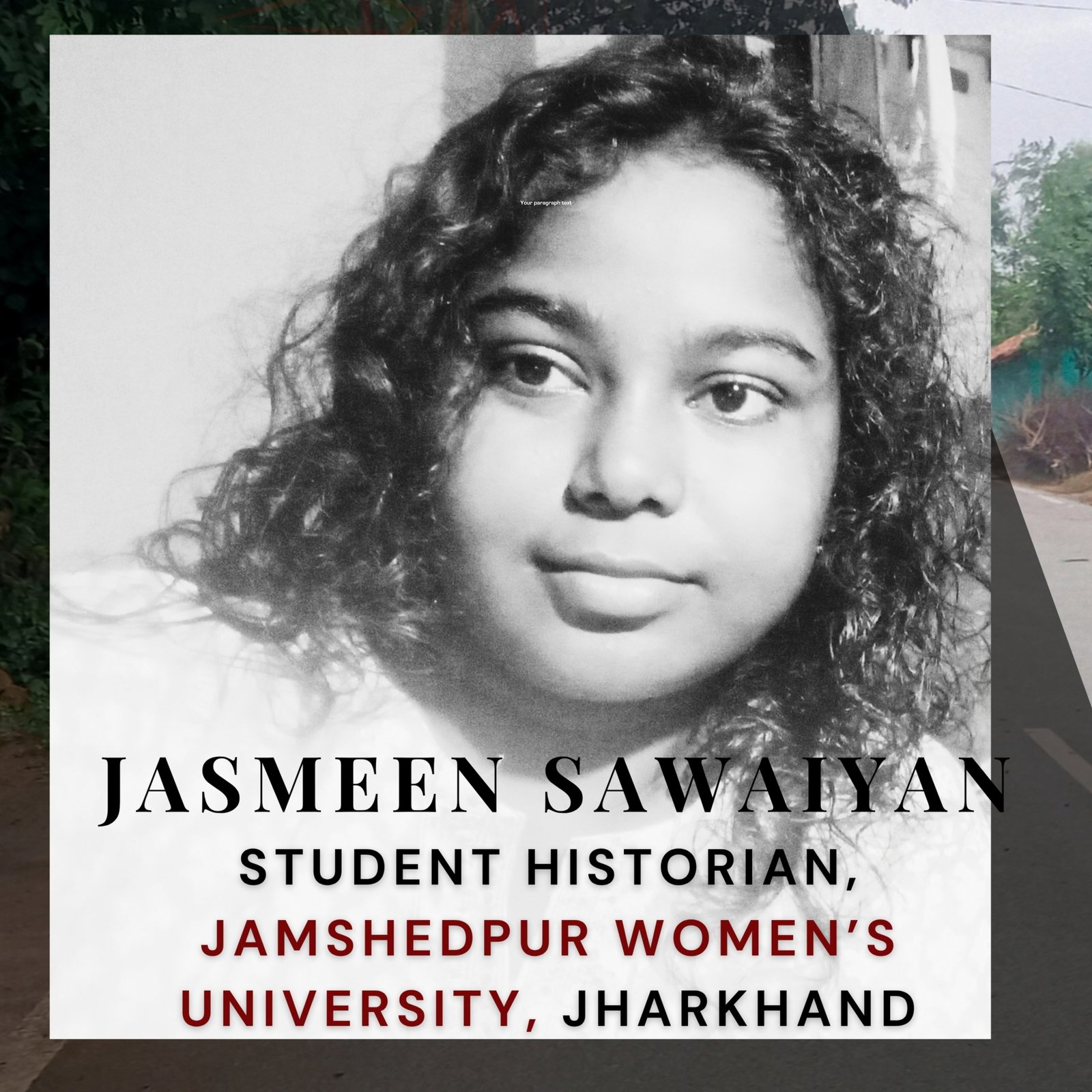 About Jasmeen Sawaiyan, the Student Historian:
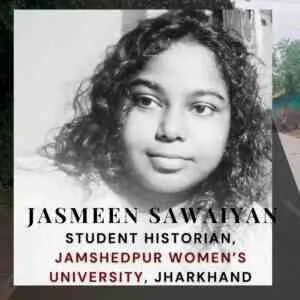
Jasmeen Sawaiyan is an English Honours student at Jamshedpur Women’s University. She comes from Khas Pokharia village in Tantnagar Block, West Singhbhum District, Jharkhand. She joined the program in June 2026 to document her village. Over the following two months, she recorded eleven elders and neighbours, and the account below is the result. It covers the village’s founding, the rituals of birth, marriage and death, the Mage and Baha festivals, children’s games, and present-day concerns such as water, soil, schooling and migration.
She does not stop at the problems. Her Village Green-Roots & Heritage Collective is a five-point plan to restore the soil with village composting, hold craft and food fairs at the Mage and Baha festivals, form a youth-led water committee, sell local foods such as leaf pita and ramba daal to reduce distress migration, and turn festival preparations into workshops where elders teach the young. In her own words, the work taught her that documenting a village keeps its memories, knowledge, and family histories from being forgotten, and that looking at both past and present shows a clear way forward.
PREFACE
Hey there! I am Jasmeen Sawaiyan, a student at Jamshedpur Women’s College. Growing up, I only ever visited my ancestral village for a couple of days during festivals or family ceremonies with my mom and dad. Every time we went, I couldn’t help but wonder why everyone in the village knew my parents so well—it honestly made me feel like we were some kind of special royalty!
Then, an unexpected college internship program landed in my lap. Though I was super nervous at first, I took a leap of faith and dove straight into documenting village life, only to uncover an incredible family secret: my very own ancestor was the pioneer who first settled this village, and it was actually named after him!
I am so excited to share this incredible journey of discovery, culture, and roots with you all. Grab a cup of tea, get comfortable, and enjoy reading this!
INTRODUCTION:
Nestled within a vibrant landscape rich with ancestral tradition, this unique village is a living mosaic of deep-rooted heritage, vibrant cultural festivals like Mage Porob and Baha, and spirited traditional games passed down through generations. From the rhythmic community celebrations honoring nature, livestock, and ancestors to the rustic simplicity of daily village life—where people draw cold, clean water from wells, share simple meals of rice and fresh greens, and preserve indigenous wisdom—this community thrives on resilience and an unbreakable bond with the land. Though it faces modern challenges like shifting climates, changing soil fertility, and economic hurdles, its spirit remains resilient, beautifully balancing its rich past with hopes for a self-reliant and thriving future.
PROFILE OF KHAS POKHARIA AND THE VILLAGE PAST
Location of the Village: Khas Pokharia is located in Tantnagar Block, West Singhbhum District, Jharkhand.
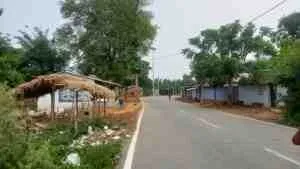
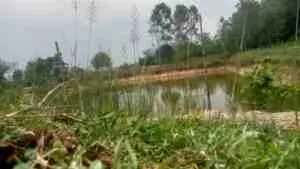
Geographical Settings: Nestled deep inside the rugged Chota Nagpur Plateau, my village of Khas Pokharia is a vibrant slice of earth resting on a rich bed of laterite soil that brings our green fields to life. Wander down our winding paths, and you will find sparkling ponds scattered everywhere—some wide and shimmering under the open sky, others tiny and tucked away. But what makes our village truly unforgettable is its residents and their custom of burying their deceased right beside, behind, or in front of their houses, so some graves are placed right beside the road in some parts.
Households and Population: From field observations, I estimate approximately 250 to 270 households are present. According to the VillageGram website, based on the 2011 Census, the village had a population of 1,071 residing in 208 households. Projected to 2026, the current population is approximately 1,320.
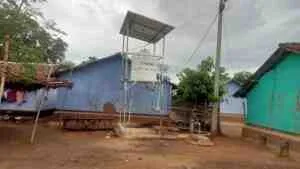
Sources of Water: Water is available through numerous ponds located throughout the village, deep wells, and manual hand pumps. Additionally, government-sponsored solar water pump sets have recently been installed.
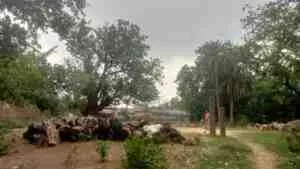
Surrounding Forest & Flora: There is a nearby forest named “Dabra Buru”. It is a compact forest containing rich biodiversity and several medicinal herbs. The primary dominant tree is the Sal tree (crucial for local rituals and daily domestic life). Other prevalent tree species include:
• Coromandel Ebony (Tendu / Kendu)
• Marking Nut Tree (Soso tree in Ho)
• Kusum Tree
• Jamun Tree
• Ber Tree
• Neem Tree
• Guava Tree
• Bamboo
• Khajur (Wild Date Palm)
• Mango Tree
Fauna and Wildlife: Creatures found in and around the village include domestic livestock and wildlife: Cow, Dog, Sheep, Goat, Cat, Bull, Ox, Pigeon, Crow, Sparrow, Parrot, Myna, Koel, Duck, Eagle, Hen, Cock, Snake, Freshwater Eel, Rabbit, Chameleon, Squirrel, Red Ants, Black Ants, Weaver Ants, Honey Bees, Wasps, Swarmers, Winged Termites, Alates, Moths, Butterflies, Yellow-Spotted Millipedes, and various other local species.
Education Infrastructure: The village contains an Anganwadi center and a Government Primary School offering classes up to Grade 7, complete with the midday meal program.
Health Facilities and Healthcare Access: When villagers fall sick, they usually try to see a doctor at a hospital, though financial constraints prevent some families from seeking formal care. Recently, a visiting doctor has begun consulting at a roadside house near the main chowk during the weekly Tuesday market (haat). The nearest major public hospital is the Community Health Centre (CHC) Tantnagar, situated in Ukugutu, at a distance of 12.6 kilometers.
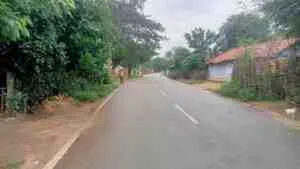
Roads, Transportation, and Recent Modernization: Road conditions are generally good. Villagers widely utilize bicycles, motorcycles, and scooters. For public transport to the city of Chaibasa, a dedicated four-wheeler operates regular morning runs (departing Khas Pokharia at 10:30 AM, returning by 12:00 PM, and repeating the cycle). Recent changes include new grocery shops, a dedicated cyber café, clothing shops, an agricultural processing mill, solar water pumps installed by the government, ongoing voter card reapplication drives, Anganwadi ration distribution, and the biannual saree and dhoti welfare distribution by the Jharkhand State Government.




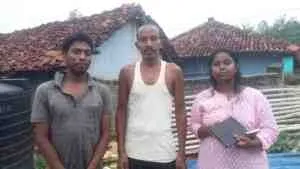
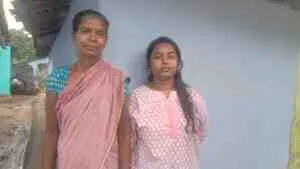
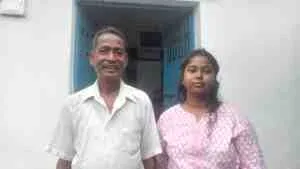
 The Village Past & Oral Histories
Naming and Settlement History
Interviewee: Kedarnath Sawaiyan (Age: 49, Gender: Male, Occupation: Railway Employee)
| “At first, a person named Sadhu Charan Sawaiyan came and settled the whole village, and based on his name, the village got its first name, ‘Sadhu Pokharia’.”
“After that, he built many ponds around the village and also became an important individual, a Manki of the whole area; that’s why it’s called Khas Pokharia.” “It’s also called Manki Pokharia, but Khas Pokharia is the official name that is on the document now.” — Kedarnath Sawaiyan |
Analysis: Every village elder interviewed corroborated the same oral lineage. The area was endowed with numerous pokhars (excavated ponds) under the leadership of an eminent, ‘khas’ (distinguished) personality—Sadhu Charan Sawaiyan—who held the revered administrative post of Manki (a traditional chieftain governing a confederacy of 9 to 16 villages under the Ho tribal governance system). Hence, Sadhu Pokharia evolved officially into Khas Pokharia.
Earliest Settlement and Forest Clearing
Interviewee: Bhim Sen Sawaiyan (Age: 61, Gender: Male, Occupation: Agriculturalist)
| “This village was totally wild back then. Our ancestor Sadhu Manki… he was born in Jaldhar village.”
“So this village previously belonged to the Bhumij people; like Kana Baduri, those people used to move around from place to place.” “After that, since the place was empty, Sadhu Manki came here, and after that Banara title people came. The first to settle here was Sadhu Manki, and then Banara came.” “In the same way, 2 to 3 men altogether set up a village together. To set up the village, they worshipped different deities and placed them all at the same worship ground, Jaherad. After that, they established fields, small potholes, made fields, and did field work also.” — Bhim Sen Sawaiyan |
Analysis: This oral testimony provides a multi-layered historical narrative. While Sadhu Charan Sawaiyan founded the permanent settlement that survives today, the primary clearing of the original wilderness was carried out by itinerant Bhumij groups who subsequently migrated onward. Upon finding the vacated clearing, Sadhu Manki established permanent habitations alongside settlers bearing the Banara clan title, consecrating the shared sacred grove (Jaherad) to bind their clans spiritually to the land.
Historical Survival and Childhood Memories
Interviewee: Chandu Kui Kandayang (Age: 70, Gender: Female, Homemaker)
| “There used to be nothing at all in the house. Going to the jungle, they used to pluck and eat wild greens (saag) and fruits. They used to make wheat starch water and drink that very water to sleep. There used to be no rice grain at all in the house. They used to eat tree leaves. They used to keep kachu leaves dried and make them by soaking in water.”
“Working in the village’s biggest, slightly rich household, he used to dig mud at their house. Hadiya used to be made in every house, so in the morning they used to go after drinking hadiya. Grinding wheat by hand, they used to make starch water. They used to eat chama, kode boiled. In the morning they used to go to the jungle and from the jungle they used to bring greens, wood, and leaves by plucking them.” — Chandu Kui Kandayang “In the past, the atmosphere was very beautiful and peaceful. It wasn’t densely populated, but now the population has increased tenfold. Houses used to be at least 100 meters apart. From here to the village below, there were only six houses.” — Bhim Sen Sawaiyan |
Analysis: This section serves heavy historical lore combined with a raw, unfiltered reality check. On one surface level, the passage drops a major aesthetic of hyper-resilience—relying on the jungle, foraging wild greens, and surviving on bare essentials like wheat starch water and boiled millets (chama, kode)—which represents an extreme-survival blueprint under historical famines. But it quickly pivots into a stark social critique. The oral history captures a massive cultural shift: moving from a low-density, tight-knit, peaceful era into an overpopulated environment plagued by modern stress, structural friction, and interpersonal bitterness. It doesn’t romanticize the past; it uses memory to highlight how structural dynamics have soured over time.
Evolution of Social Relations and Gender Status
Interviewee: Madhuri Sawaiyan (Age: 65, Gender: Female, Homemaker)
| “People were super honest and got along really well at that time. People used to value daughters-in-law and daughters much more in the past, but it’s not like that anymore. Now there’s so much torture. I don’t know if it’s jealousy or what, but jealousy really shows in this. It wasn’t like this before.” — Madhuri Sawaiyan |
Analysis: This oral account highlights the erosion of communal solidarity. In earlier decades, despite extreme material scarcity, interpersonal trust was profound and the social status of women—especially daughters and daughters-in-law—was sheltered by community respect. With rapid population growth, economic precarity, and external cultural pressures, that collective harmony has weakened, giving way to domestic tensions, jealousy, and social strain.
Traditional Life-Cycle Rituals (Death, Birth, Marriage)
Interviewee: Bhim Sen Sawaiyan (Age: 61, Gender: Male, Agriculturalist)
- Death and Mortuary Rites (Ading Induction & Dulsunum)
In Ho tribal tradition, community solidarity dictates that no relative or neighbor arrives empty-handed when a bereavement occurs. Visitors bring turmeric and mustard oil in traditional leaf bowls (Dhona). For those tasked with the physically demanding labor of digging the burial pit, traditional rice beverage (Diyeng) and meals are provided, recognizing that the grieving family has not eaten. Relatives from neighboring villages are formally summoned to witness the burial and pay their final respects.A profound metaphysical ritual follows at the gravesite: a sacred cord called Sayu is tied to the toe of a female member of the household. Holding this spiritual link, she walks directly from the burial pit into the Ading—the sacred inner room of the house dedicated to departed ancestors—symbolically leading the soul of the deceased into the domestic sanctuary so it does not wander in the wilderness.On the following day, the tonsure ceremony (Mundan) takes place at a local river, pond, or ghat. Mourners bathe, massage their bodies with oil and turmeric paste, and don clean clothes before re-entering the Ading. In the evening, a solemn communal feast of plain food is shared. To verify that the departed soul has safely crossed into the realm of the ancestors, sieved wood ashes are spread evenly across the floor of the darkened Ading. A ritual specialist invokes the spirit by name. When the room is reopened, family members inspect the ashes for imprints—which appear in the form of a flower, a pigeon’s footprint, or a cat’s paw. The appearance of these sacred marks confirms that the ancestor has safely settled into the house to act as a guardian spirit.The mortuary cycle culminates in Dulsunum (the post-burial funeral feast / mrityu bhoj). Heavy memorial stones are erected over the grave site. Relatives pour consecrated oil over the memorial stone, offer turmeric-infused dishes, and sprinkle rice flour, completing the purification of the family. - Birth and Purification Rites (Chatiyari / Nukta & Eksiya)
When a child is born, the household observes strict birth customs. The falling off of the umbilical cord stump (typically within nine days) marks the Chatiyari ceremony, known locally in the Ho language as Nukta. The mother and newborn undertake a ritual purifying bath. By the 21st day, the child enters the stage called Eksiya, indicating strength and physical maturity. The baby’s first ceremonial haircut is performed, followed by thorough cleansing. To introduce the new infant to the ancestral lineage, a red hen is ritually offered inside the Ading. Purified with consecrated turmeric water, the infant is presented to the guardian ancestors so they will recognize, bless, and protect both mother and child from harm. - Marriage Customs (Bala, Ere Bonga, and Kansa Dowry)
Traditional Ho matrimony is initiated through mutual household visits where families carefully inspect property, lifestyle, and character. Upon mutual agreement, the formal engagement ceremony (Bala) takes place. During this ceremony, the groom’s representatives tie symbolic clothes for the bride, formally recognizing her as ‘half a daughter-in-law’ and signifying an unbreakable covenant. The groom’s family members likewise receive clothes.A standardized bride price is agreed upon: historically fixed at 101 rupees, accompanied by a pair of oxen and a pair of cows. Before wedding dates are finalized, the parties assemble at the geographical midpoint between the two villages to worship a boundary deity known as Ere Bonga. This ritual is conducted exclusively by male family members, who sacrifice a goat and share a meal to pray that no misfortune, illness, or hardship obstructs the couple’s marital journey. In historical times, the groom’s party transported massive clay pots filled with grain to feed the bride’s kin.Crucially, the bride is gifted domestic utensils crafted of Kansa (bell metal/bronze), as well as silver and gold ornaments. Rather than serving as mere ornamental ostentation, this represents a Go-bag and financial safety net: in times of severe family distress or medical emergency, the woman retains autonomous ownership of these bronze and precious metal assets to pawn or sell for emergency cash.
Analysis: These rites illustrate how indigenous customs function as sophisticated social coping systems. Rather than viewing death and birth as isolated biological events, the community utilizes the sacred sanctuary of the Ading to preserve continuity between generations. Furthermore, practices such as gifting Kansa utensils reveal deeply pragmatic customary legal frameworks designed to secure economic autonomy for women within patriarchal marriage structures.
AGRICULTURE, FOOD AND LIVELIHOODS
-
Historical Cultivation and Traditional Diet
In past decades, agrarian life was defined by extreme vulnerability to seasonal famines and weather extremes. Villagers subsisted strictly on what could be harvested locally from fields or hunted and gathered from surrounding scrub forests. Paddy cultivation formed the backbone of the economy. To maximize arable land after the paddy harvest, villagers practiced cyclical crop rotation, cultivating lentils (such as ramba daal) or planting mustard seeds, from which pungent cooking oil was pressed manually.
Because food scarcity was persistent, ancestral culinary repertoires remained exceptionally minimalist. People subsisted on boiled coarse rice, lentils, and diverse wild leafy greens (saag) plucked from riverbeds and forests. During ritual gatherings and puja days, rice flour was kneaded into traditional pita (pitha / steamed dumplings wrapped in Sal leaves). During lean seasons, households dried kachu (taro) leaves and rehydrated them, drinking boiled wheat or rice starch water.
Modern Livelihood Patterns and Household Economics
Today, village households sustain themselves through a patchwork of low-yield farming, cattle rearing, modest petty trade, and interstate wage labor. However, local agricultural income is starkly inadequate to support a family throughout the year. Daily agricultural labor within the village yields a meager wage of roughly ₹100 per day (hajri). Consequently, village shopkeepers face persistent business stagnation: because rural families possess minimal purchasing power, local shops struggle to turn a profit, trapping the community in a self-reinforcing cycle of rural liquidity shortage and economic stagnation.
CULTURAL TRADITIONS, DANCE AND GAMES
- Annual Village Festivals
Interviewees: Rajni Sawaiyan (Age: 39) & Bhim Sen Sawaiyan (Age: 61)
Five major festivals dominate the cultural calendar of Khas Pokharia:
1. Mage Porob (The supreme festival)
2. Baha Festival (The flower festival)
3. Hero Porob (Agricultural consecration)
4. Jomanwa Festival (New harvest festival)
5. Dhit Puja / Chahet Puja (Communal celebration with Chhau dance)
The Six Days of Mage Porob:
Mage Porob is the premier festival of the Ho people, celebrated annually over six rigorous days in February during the full moon of Maagh (Maagh Purnima):
• Day 1 — Gaumaara (Goomar): Consecration of cattle and bulls. Villagers gather at the cowshed where rituals honor the draught animals; celebrants mimic quadruped motions around the sacred altar to embody their livestock.
• Day 2 — Otehili: Nature worship dedicated to Dogra Pahad (the sacred hill), beseeching the spirits for timely monsoon rains, fertility, and community peace.
• Day 3 — Baundi (Guri Porob): Preparation and ancestor invocation. Domestic courtyards are purified with fresh cow dung plaster. Families climb the hills or visit the weekly bazaar to gather Sal leaves and ritual ingredients. Boiled ramba daal is sanctified inside the Ading and consumed.
• Day 4 — Maran Porob: The central day of great feasting, communal hospitality, and intensive spiritual rites.
• Day 5 — Basi Porob: Feasting continues with the preparation and sharing of non-vegetarian dishes, including fish and meat.
• Day 6 — Haramangya: The concluding day, marked by unique folk rites, including playful mock marriages for young children whose dentition resembles canine teeth, marrying them symbolically with young puppies to ward off negative spirits.
The Baha Festival & Other Observances:
Celebrated in March as the Sal trees sprout fresh green foliage and fragrant blossoms, Baha spans two days. Villagers conduct collective worship at Jaher Gutu (the sacred grove / desauli) dedicated to Baha Bonga. Manually harvested masoor daal and freshly plucked blossoms are offered to ancestral spirits in the Ading. Celebrants put on new attire, exchange blessings, and celebrate the awakening of spring.
Hero Porob involves ceremonial water libations promising symbolic animal sacrifices to ensure prosperous seedling growth. Cattle are fed blessed ramba daal over cooked rice served on Sal leaf plates. Rice flour slurry is ritually sprinkled over farming tools, plows, and domestic doorways; unsalted leaf pita is steamed for evening consumption.
Chahet Puja spans three days of doorstep rituals, culminating on the final night in a grand village-wide gathering at the mandir and an exhilarating, night-long Chhau dance tournament.
Traditional Dance Forms and Musical Instruments
As an indigenous Ho community, the cultural expression of Khas Pokharia is anchored in the traditional Chain Dance. Dancers link arms and move in synchrony, their steps regulated by the deep, booming rhythms of the Dama—a massive traditional percussion drum similar to the dholak—alongside auxiliary folk instruments.
Indigenous Games and Traditional Childhood Play
Interviewees: Champa Gope (50), Belmati Sawaiyan (38), Rajni Sawaiyan (39)
Village youth engage in active physical sports such as Kabaddi, football, and Pitu (seven stones). Alongside these, oral history documents distinctive indigenous games:
• Chur Chur & Aat Char: A high-stakes tactical chase game featuring dynamic role-play. A dedicated sanctuary is demarcated for a ‘King’ and ‘Queen’. One player acts as King, while others act as guards and thieves. When the King dashes between four-cornered or circular sand enclosures to join the Queen, lurking thieves attempt to strike him. Guards intervene to shield the monarch; any player tagged on the body immediately assumes the role of a thief.
• Khopa Khopi: A sand-based guessing game. Players sculpt stretched sand houses and hide a small wooden stick beneath one compartment. Opponents analyze the layout and guess the stick’s location, accumulating points for correct deductions.
VILLAGE PROBLEMS AND PUBLIC LIFE
- Core Ecological & Infrastructural Challenges
- Water Security: Villagers rely primarily on domestic wells for clean, sweet, naturally chilled water. In peak summer months, a mild shortage occurs as water tables drop, though hand pumps and protected wells continue to furnish adequate supply without completely running dry.
- Livelihood and Employment: Local agriculture is seasonal and largely unremunerative. Smallholders sell produce and snacks at the Tuesday haat, but purchasing capacity across the village remains depressed, forcing youths into distress migration.
- Forest and Hills Exploitation: The Dabra Buru forest has remained physically stable across generations. Villagers collect fallen firewood for cooking fuel, gather Sal leaves for stitching disposable plates and bowls, harvest seasonal fruits, and quarry flat slate stones used to cover traditional graves.
- Environmental & Industrial Degradation: In earlier times, agricultural fertility was sustained naturally through cow dung, goat droppings, and charred leaf compost without chemicals. With industrial expansion and nearby factories, airborne pollutants and chemical residues have severely degraded soil fertility. Elders note that the air has lost its natural freshness, and climate patterns have destabilized—manifesting as unseasonal downpours, severe cloudbursts threatening floods, or extended mid-monsoon droughts.
- Educational Deficits: While a primary school operates in the village, attendance and learning outcomes remain poor. The facility is understaffed, with only 3 teachers (one headmaster and two instructors) managing seven grade levels. Financially stressed families often pull children from school to undertake local daily labor, forcing youth into premature adulthood.
- Migrant Labor and Community Social Relations
Interviewee: Janardhan Sawaiyan (Age: 25, Railway Employee)
| “Everyone from the village goes outside to work because there is not that much earning in our village. Farming is the only work in the village, and those who go outside earn a higher income. I work in the Railways. We get up to 18–20 thousand along with PF, which is why we feel like going outside. Farming work in our village area pays a daily wage (hajri) of only 100 rupees. That is why people migrate. From my experience, I have gone to Chennai, Nagaland, Delhi, Gujarat, and Karnataka.” — Janardhan Sawaiyan |
Inter-Community Coexistence:
Field observations demonstrate warm daily interactions across tribal, SC, and OBC communities. Neighbors frequently drop by one another’s homes while walking through the lanes, and multi-caste residents actively participate together in all major annual festivals.
THE VILLAGE’S FUTURE, PRESERVATION AND CREATIVE PROPOSALS
Importance of Documenting Village Life & History
Documenting a village’s life and history is vital because oral traditions, indigenous practices, and local ecological knowledge risk being permanently forgotten as older generations pass away. By recording details about ancestral worship (Ading), seasonal rituals (Gaumaara, Otehili), and community governance systems (such as the Manki institution), we construct a permanent archive. This documentation validates the community’s unique identity, preserves endangered dialects and folklore, and ensures that the historical roots of the village remain intact for researchers, historians, and future descendants.
Preserving History and Culture for Future Generations
Preserving culture is necessary to give future generations a grounding sense of belonging and continuity. When children and young adults understand the spiritual philosophy underpinning festivals like Mage and Baha—which celebrate coexistence with nature, respect for livestock, and ancestral gratitude—they internalize values of community cooperation, environmental stewardship, and mutual respect. Cultural preservation acts as a buffer against cultural homogenization, ensuring that indigenous wisdom, performing arts, and traditional games thrive in a rapidly changing world.
Personal Vision for the Village’s Future
Bridging Past and Present: A sustainable future where modern technology harmonizes with ancestral traditions. Rather than abandoning customs, Khas Pokharia can leverage its vibrant festival calendar and games as the foundation for community-managed eco-cultural tourism.
Resource Sustainability: Augmenting traditional well infrastructure with community-managed rainwater harvesting to guarantee continuous water security during peak summer droughts.
Empowered Youth: Engaging youth in digital archiving and community leadership, transforming local environmental wisdom into tools for self-reliant economic growth.
Creative Proposal: The ‘Village Green-Roots & Heritage Collective’
A five-point practical roadmap designed to resolve core village challenges:
1. Reviving Natural Agriculture: To counter the soil fertility collapse induced by factory pollution, establish a village-wide organic composting cooperative utilizing cattle manure, leaf mulch, and goat droppings, eliminating expensive synthetic chemical inputs.
2. Boosting Local Economy & Shopkeepers: Organize community-managed agro-tourism and craft fairs during Mage and Baha celebrations to attract regional visitors, circulating currency into local grocery and fabric shops.
3. Sustaining Local Livelihoods: Market traditional culinary specialties (steamed leaf pita, organic ramba daal) and indigenous handicrafts to create lucrative hometown income streams, reducing forced distress labor migration.
4. Community Eco-Water Wells: Form a youth-led village water committee that integrates low-cost percolation pits and sand filters around public hand pumps and wells, securing the water table year-round.
5. Cultural-Eco Festivities: Transform festival preparations into living workshops where elders mentor school youth in regenerative farming, native cuisine, traditional songs, and the Dama drum rhythms.
CONCLUSION
Working on this documentation project has been an amazing and eye-opening journey into the heart of the village. It allowed us to explore the deep history, culture, and everyday lives of the people who live there. We learned about their vibrant and colorful traditions, like the six-day Mage Festival, where people worship cows, nature, and their ancestors, and the Baha Festival that celebrates new flowers and the changing seasons on Sal trees. We also recorded how they used to survive on simple meals of rice, lentils, and fresh greens during hard times of starvation, and how games are played with kings, queens, guards, and thieves.
At the same time, this project helped us understand the heavy challenges the village faces today. Because of nearby factories, the air quality has dropped, and the soil has lost its natural fertility compared to the old days when people only used cow dung and natural manure. The weather has also become unpredictable, bringing heavy floods or droughts that ruin farming. Because local farming and daily wage labor do not pay enough, many people—especially young workers—have to travel far away to cities or work in railways just to make a living. Back in the village, this leaves shopkeepers struggling because people do not have enough steady money to buy things, creating a difficult financial cycle.
Even with all these modern struggles, the spirit and culture of the village remain strong. Documenting all of this was so important because it ensures that these precious memories, indigenous knowledge, and family histories are not forgotten over time. By looking at both the past and the present, we can see a clear path forward. My vision for the future is to help the village use its own rich culture, traditional farming wisdom, and community strength to build a self-reliant and happy home, ensuring that the younger generation can stay, thrive, and keep their wonderful history alive forever.