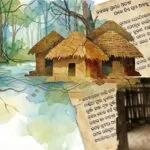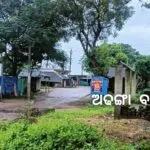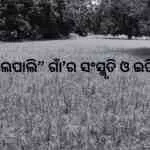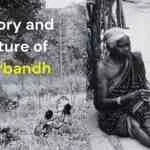


🎵 The lyrics of Village History Song
Our small village….
What a beautiful name …
From birth to death…
It gave us our identity and fame…
Our small village….
What a beautiful name…
It showed us the path to live in this world…
Come, let us learn about the village’s story, its history…
The tales of festivals, harvest, and village deity…
Let’s ask and understand what memory yields.
Ask the grandmothers and grandfathers, uncles and the elders….
How did they see the village they lived in?
When they played in the dust and grime?

What was their world…? What was its name?
When was it born…? Who gave it its name…?
Who were the first settlers, and from where did they come?
What was their caste and what was their faith?
How many rivers, ponds, and streams?
Forests, hills, and pathways….
What creatures, insects, flowers and vines?
Once lived beneath these ancient pines?
How many castes and faiths lived side by side?
How did they live in those days?
Who were the rich who lived with grace?
And what remains of the poor man’s trace?
Temples, mosques, churches, gurudwaras – all stand,
Schools and health in this land.
How did justice flow? How did they teach?
What did the farmers preach?
So many lives once lived here –
Why did the forests disappear?
Why did the potter’s wheel stop spinning?
Why did the weaver’s thread stop singing?
How many seeds were stored in the granary’s keep?
Are they still alive… or do we weep?
What happened to the…
Lost food and cuisines?
Has that bond been lost in chains?
Shall we promise, hand in hand?
To bring back the lost beauty of our land?
Let us build a new history bright –
And the whole world will smile in light again…
And the whole world will smile in light again…
Our small village….
What a beautiful name …
From birth to death…
It gave us our identity and fame…
Our small village….
What a beautiful name…
It showed us the path to live in this world…
Watch the Village History Song here:
During the pandemic, when classrooms emptied, and conversations retreated behind screens, we attempted something unusually intimate. We asked children to turn their gaze homeward. Our initiative, Ama Gaan Ama Jeeban (Our Village, Our Life), invited students to document the histories and cultures of their own villages, the stories that live just outside their front doors.
We expected excitement. What we encountered instead was silence.
Not apathy. Silence. The kind that reveals a quiet truth. In our villages, people debate national politics and global events with ease, yet seldom do they sit together to ask what the story of this place might be. Children had never been asked why their village carries the name it does, what memories shaped it, or how the elders remember it. With curiosity awakened, they turned to the only people who still held fragments of the past. The grandparents. The storytellers.
That was when we realised something essential. Before children could write history, they needed to believe that their village deserved history. That it was worthy of wonder.
So, in 2021, we created a song.
A song that asks simple questions with an urgent tenderness. What grows here. Who built this? What festivals keep the year alive? What songs rise from this soil?
We shared it with violinist and Samadhwani cultural coordinator Jyoti Prakash Sahu, who shaped it with a refrain that lifted the melody into something luminous. Tabla player and music teacher Jitendra Kumar Sahu completed the arrangement, bringing in his students from Baliguda Adarsha Vidyalaya in Kandhamal to lend their voices. Young voices, singing about the world just outside their windows.
For two years, the song lived quietly as audio, passed from hand to hand, sparking curiosity. Then, in 2023, while working in Paikmal, we finally recorded it as a music video.
The first time we showed it to students, we asked what the song was about.
“Village History Song”, they shouted, as if naming something they had been waiting for.
Then came the louder answer, the one that mattered most. “Yes, Madam. We will write our village’s history too.”
Since then, hundreds of children have carried that promise back to their communities. They return with notebooks and questions, and with the courage to ask what earlier generations forgot to tell.
We do not know how far this song will travel, beyond Odisha or beyond India. But we added subtitles anyway, because sometimes all it takes is one young person in one small place deciding that their past matters.
Behind this work stands Samadhwani’s cultural team. Musicians, students, and a cameraman like no other. The video was created by Laxmidhar Murmu, a filmmaker without formal training whose determination speaks louder than any certificate ever could. His camera does not just record. It listens.
This project rests on a single question. Deceptively ordinary and quietly transformative.
What is my village’s story?
If we do not ask, the stories fade.
If we do not write, the map becomes blank.
If we do not remember, who will?