Editorial Note:
What does a village remember when its elders begin to speak? In Turamdih, East Singhbhum, it remembers a spring that gave the village its name, a Jamun tree where the Gram Devta is still worshipped, sacred hills guarded by Marang Buru, and a cave-like source called gupha that once gave people water in times of drought. It also remembers a time when the forest provided Mahua flowers and Sal leaves, and the Akhra echoed with the Mandar and Nagara. Rani Nayak, an English Honours student at Jamshedpur Women’s University, listened closely to these memories. A resident of Turamdih in Golmuri-cum-Jugsalai Block, she took part in Samadhwani’s Village History and Cultural Documentation Internship, which invites students to research and record the histories of their own villages. She sat with farmers, homemakers, and workers, and documented the village’s origins, festivals, food, games, livelihoods, forests, and water sources. She was honest about the changes that mining has brought to her village, and she closes with an idea of her own: a Turamdih Heritage and Environment Committee, so that the village’s nature and culture are protected together. For this careful and heartfelt work, Samadhwani has awarded her the title of Student Historian. We are grateful to Jamshedpur Women’s University for letting its students take part. We invite you to read her essay, walk through Turamdih with her, and share your thoughts.
– Swayamprava Parhi
About the student
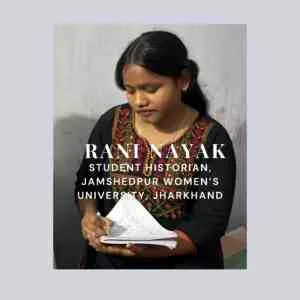
My name is Rani Nayak. I live in Turamdih village, East Singhbhum, Jharkhand, India.

I am a student, and I am studying B.A. Honours at Jamshedpur Women’s University. There are four members in my family. My hobbies are reading books, listening to music, helping my family, and learning new things. I am honest, hardworking, and friendly. My goal is to build a successful career and contribute to the development of my family and society.
 About Turamdih:
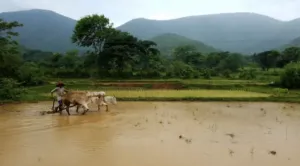
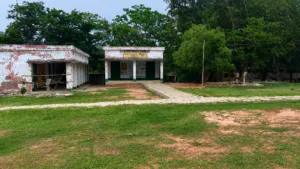
My village is located in the eastern Singhbhum district of Jharkhand. It is a peaceful village surrounded by greenery, trees, and open fields. Most of the people depend on agriculture, daily wage work, and small businesses for their livelihood. The main crops grown in the village are paddy, maize, and vegetables. At present, the village has electricity, roads, hand pumps, and drinking water facilities. There is a government primary school and an Anganwadi centre in the village. For medical treatment, people go to nearby hospitals in Jamshedpur or other nearby areas. Mobile phone networks and internet services are available, and many people use smartphones.
The village is well connected to Jamshedpur by road, making transportation easier. People celebrate festivals such as Sarhul, Sohrai, Karam, Durga Puja, Tusu Parab, and Diwali together with great joy. The villagers live peacefully and help each other. Although some problems like employment and water issues still exist, the village is developing gradually.
Village location
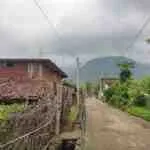
My village is Turamdih. It is located in Golmuri – cum -Jugsalai Block, East Singhbhum district, Jharkhand state, India. Turamdih village has a hilly, rocky, and slightly undulating landscape. The natural environment of the village is different from areas with large rivers and dense forests. The village surroundings include small rocky hills, red and stony soil, scattered trees and shrubs, agricultural land, and mining-related infrastructure. The village has small hills, rocky areas, and elevated land. The land is not completely flat. Some parts of the village have rocky and uneven surfaces, which make farming more difficult. The higher areas are generally drier and have less water retention.
The soil of our village is mainly red, stony, and gravelly, with small stones and pebbles. The soil is relatively dry and is not as fertile as rich alluvial soil. In the past, villagers cultivated crops according to the nature of the land and rainfall. Paddy was mainly grown in suitable low-lying areas, while upland areas were used for crops such as Madua (Ragi), Kudo, Suan, pulses, and other seasonal crops.
Turamdih does not have a dense or thick forest within the immediate village area. However, there are scattered trees, shrubs, and patches of greenery. Trees such as Sal, Mahua, and Palash can be found in the surrounding areas. In the past, villagers depended more on forest resources such as firewood, fruits, flowers, leaves, honey, and medicinal plants. Today, the natural vegetation has reduced in some areas due to mining, industrial development, roads, settlements, and other activities.
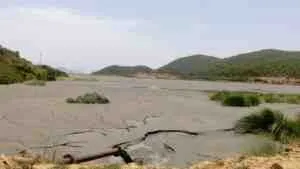
There is no major river flowing directly through Turamdih village. The wider region has important rivers such as the Subarnarekha and Kharkai, but they are not located within the immediate village area. The village mainly depends on local water sources such as ponds, hand pumps, wells, underground water, and seasonal rainwater channels. The villagers have reported concerns about the quality of some traditional water sources. According to them, ponds and hand pumps have become difficult to use because of water pollution, while the village now receives water through a water tank and other supply arrangements.
One of the most noticeable features of the surrounding area is the presence of uranium mining and related industrial infrastructure. The activities of UCIL have changed the geographical and environmental landscape of the area. Mining structures, roads, industrial facilities, and waste-management areas are now part of the surroundings.
Analysis
The geographical setting of Turamdih has changed significantly over time. Earlier, the village environment was more closely connected with agriculture, forests, natural water sources, and traditional livelihoods. The rocky red soil, hills, and seasonal water availability shaped the types of crops that villagers cultivated. Today, the landscape is influenced not only by its natural features but also by mining and industrial activities. The absence of a major river within the village means that local water sources such as ponds, hand pumps, wells, and underground water are especially important. According to villagers, changes in these water sources have affected their daily lives and agriculture.
Therefore, the geographical environment of Turamdih can be described as a rocky and hilly rural landscape with red stony soil, scattered vegetation, limited natural water sources, and significant mining and industrial development. Protecting the remaining natural vegetation and ensuring safe water and healthy soil are important for the future of the village.
Ancient stories and legends of the village
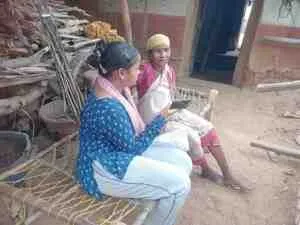
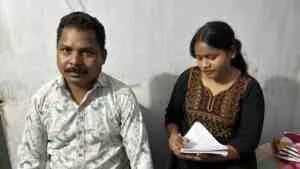
According to the oral traditions and memories shared by older villagers, Turamdih has a long history connected with its hills, trees, water sources, and nature. These stories have been passed from one generation to another. One commonly remembered belief is connected with the name of Turamdih. According to local understanding, the name is associated with “Turam” (spring or water source) and “Dih” (an elevated place or settlement). The name therefore reflects the village’s old connection with water and the natural landscape.
In earlier times, villagers considered the surrounding hills, forests, trees, and water sources sacred. Older people believed that hills were protected by Buru Bonga (mountain spirits) and that nature should not be disturbed unnecessarily. People were taught from childhood to respect the hills, forests, and water sources. There was also a belief that during difficult times such as drought, illness, or poor harvest, villagers should pray to their traditional village deity for protection and good rainfall. One important memory shared by older villagers is about a cave-like natural place from where people collected water during periods of drought. When there was not enough water in the village, people used to go there to bring water for their needs. Today, villagers do not depend on this old water source in the same way. Water tanks and other modern water-supply arrangements have become more important. This shows how the village’s way of life and water practices have changed over time.
Gram Devta and the Jamun tree
Another important traditional belief is related to the Gram Devta, who is worshipped under a Jamun tree in the village. Older villagers remember that the Gram Devta was worshipped much more regularly in the past, even almost every day. People believed that the Gram Devta protected the village, families, cattle, and crops. During difficult times, villagers gathered at the sacred place and prayed for the safety and well-being of the whole community. Today, regular worship has decreased, and the puja is mainly performed during important festivals and special occasions.
Analysis
These stories show that the ancient life of Turamdih was closely connected with nature, water, hills, trees, and traditional beliefs. Even though many old practices have changed with modernization, the younger generation still carries the history and cultural identity of the village.
Natural environment of the village
Turamdih has a mainly hilly, rocky, and uneven landscape. During the monsoon season, the surroundings become greener, while during the dry season the area appears drier and rocky. The village has different types of trees, ponds, and traditional places that are connected with the life and culture of the villagers.
Common trees found in and around the village include Sal (Sakhua), Mahua, Palash, Bahera, Jamun, Mango and Kusum. These trees are useful to villagers for food, shade, leaves, wood, and other traditional purposes. The Mahua tree is especially important in local life. Its flowers are collected and traditionally used by villagers. Sal trees are also important because their leaves are used for making traditional leaf plates and bowls. One of the important natural and cultural places in the village is the Jamun tree under which the Gram Devta is worshipped. Villagers consider this place sacred. According to older villagers, worship of the Gram Devta was much more frequent in the past. People used to pray there regularly and believed that the deity protected the village, its people, cattle, and crops. Today, worship is mainly performed during important festivals and special occasions.
Ponds and water sources
Ponds and other natural water sources have traditionally been important for village life. In the past, villagers depended more on ponds, wells, and other natural sources for their daily needs. Older villagers also remember a cave-like natural water source where people used to collect water during periods of drought. Today, the situation has changed, and villagers depend more on water tanks and other supplied water sources. The village has small hills, rocky areas, and elevated land. These natural features are part of the landscape remembered by older villagers. The hills and trees also have cultural importance because tribal traditions connect nature with village beliefs and worship.
Memorial and ancestral places
Traditional memorial stones and ancestral places are also important in tribal culture. These places remind people of their ancestors and the history of their community. They are respected by villagers and form an important part of the cultural landscape.
Analysis
From the information collected from villagers and my field observation, I found that the natural environment of Turamdih is closely connected with village culture, religion and everyday life. Trees, ponds, hills and sacred places are not simply natural resources; they are also connected with memories, traditions and beliefs.
However, the natural environment has changed over time because of mining, industrial development and changes in the use of land and water. Therefore, protecting the remaining trees, water sources and sacred places is important for preserving both the natural environment and cultural heritage of Turamdih.
According to the Census 2011 data, Turamdih village has approximately 431 households. According to the official Census 2011 data, the total population of Turamdih village is approximately 1,988 people. In simple terms, around 2,000 people live in the village. Turamdih village is home to different communities, including Santhal, Ho, Munda, Mahato (Kudmi), Nayak, and other communities. People from these communities live together peacefully and participate in social activities, festivals, and other village events. The main sources of water in Turamdih village are ponds, wells, hand pumps, tube wells, underground water, and water supplied through water tanks. According to the villagers, in the past they mainly depended on ponds, wells, hand pumps, and underground water for drinking, bathing, washing, cooking, and other daily activities. These traditional water sources were an important part of village life.
However, according to the villagers, the condition of some traditional water sources has changed significantly. They believe that the water in some ponds, wells, and hand pumps has become polluted due to the presence of mining and industrial activities in the surrounding area. Villagers are particularly concerned about the impact of waste and dust from the mining and tailings areas on local water sources. Because of these concerns, many villagers do not consider the water from some traditional sources safe for drinking.
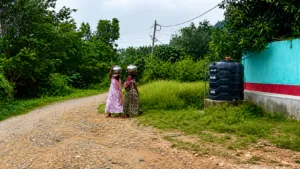
At present, UCIL has provided water tanks and a water supply system for the villagers. People mainly use this supplied water for drinking and cooking because they consider it safer than some of the local water sources. However, according to the villagers, the water supply does not always come regularly, and sometimes there is a shortage of water, especially during the summer.
The villagers also said that some people still depend on pond water for bathing and washing because the water supplied through the tank is not always sufficient for all household needs. Some villagers reported experiencing itching and skin irritation after bathing in certain ponds. Therefore, they are concerned about the quality of the pond water.
Analysis
The water situation is one of the major concerns of the people of Turamdih. The villagers feel that the deterioration of traditional water sources has increased their dependence on externally supplied water. The UCIL water tank has provided an important source of drinking water, but the villagers believe that a regular supply of safe and clean water is necessary for every household. They also feel that the quality of ponds, wells, hand pumps, and underground water should be properly tested and monitored so that the health and safety of the villagers can be protected.
Village forest and trees
Yes, there are forest areas and patches of trees near Turamdih village. Local people commonly refer to the nearby forest and hill area as Turamdih Buru, meaning the forest and hill of Turamdih. Some local people also associate the surrounding forest area with Banduhurang Buru. The forest landscape is connected with the wider hilly and forested environment of the Singhbhum region. In the past, the forest around the village was more extensive and played an important role in the daily life of the villagers. People depended on the forest for firewood, fruits, flowers, leaves, honey, medicinal plants, and other forest products. The forest was also important for traditional food, culture, and livelihood. According to the villagers, the forest cover has decreased over time because of mining activities, industrial development, construction, roads, and other changes in land use. The expansion of mining and related infrastructure has affected some forest areas. Villagers also feel that dust and other environmental changes associated with mining have affected the surrounding natural environment.
The following trees are commonly found in the forest areas and surroundings of Turamdih:
Sal (Sakhua)
Mahua
Kendu (Tendu)
Palash
Kusum
Mango (Aam)
Jamun
Tamarind (Imli)
Bamboo (Baans)
Piyar (Chironji)
Neem
Banyan (Bargad)
Peepal
Jackfruit (Kathal)
Ber
Arjun
Moringa (Munga)
Among these, Sal, Mahua, Kendu, Palash, Kusum, and Bamboo are especially important for the traditional life of the local people. The villagers traditionally used forest resources in many ways. Sal leaves were used to make leaf plates and bowls (pattal and dona), while Sal wood was used for household purposes. Mahua flowers were collected, dried, and used as food and for traditional purposes. Kendu leaves were collected and sold as a source of income. Mango, Jamun, Piyar, and other forest fruits were eaten seasonally. People also collected firewood, honey, medicinal plants, and other useful forest products.
Analysis
The forest is an important part of Turamdih’s natural and cultural heritage. It has traditionally supported the food, livelihood, and cultural practices of the villagers. The reduction of forest cover has affected the availability of forest products and has weakened the traditional connection between the people and the forest. Therefore, it is important to protect the remaining forest areas, conserve native trees, and encourage the planting of local species such as Sal, Mahua, Kendu, Palash, and Kusum for the future of the village.
Turamdih village has a variety of domestic animals, birds, insects, reptiles, and other small creatures. The village houses, agricultural fields, ponds, trees, and surrounding natural areas provide suitable habitats for many different species.
Many families in Turamdih keep domestic animals for farming, food, and household purposes. Common animals found in the village include:
- Cows and Oxen: Cows are kept for milk, while oxen are sometimes used for agricultural work.
- Goats: Goats are commonly reared by village families and are an important source of income.
- Pigs: Some families, particularly in tribal communities, rear pigs.
- Desi Chickens: Local chickens are commonly kept in household courtyards.
- Dogs: Domestic and stray dogs are commonly seen moving around the village.
- Cats: Cats are also found around houses and are often kept to control rats.
- Rats: Rats are commonly found around agricultural fields and grain storage areas.
- Mongoose: Mongooses can sometimes be seen near fields and around houses.
Birds
Many birds can be seen in the village, especially around trees, agricultural fields, ponds, and houses. Common birds include:
- Sparrow (Gauraiya): Often seen around houses and courtyards.
- Myna (Maina): Commonly seen in groups around the village.
- Crow (Kauwa): Frequently found near houses and trees.
- Pigeon (Kabootar): Often found around houses and old buildings.
- Baya Weaver (Baya): Its hanging nests can sometimes be seen near fields and trees.
- Egret (Bagula): Often seen near ponds and water-filled agricultural fields searching for insects and small animals.
- Parrot (Tota)
- Koel
- Dove
- Owl
- Kingfisher
Insects and reptiles
The village environment also supports many insects, reptiles, and other small creatures. Some commonly found species include:
- Snakes: Snakes may be seen near agricultural fields, grass, and piles of straw, especially during the rainy season.
- Scorpions (Bichhoo): Sometimes found in dark corners, walls, and areas with stones or wood.
- Centipedes (Kankhajura): Commonly found in damp places.
- Termites (Deemak): They can damage wooden structures and old trees.
- Earthworms (Kenchuye): Found in agricultural soil and are important for maintaining soil fertility.
- Crickets (Jhingoor): Their sounds are commonly heard at night.
- Butterflies
- Honeybees
- Dragonflies
- Grasshoppers
- Ants
- Mosquitoes
Others creatures
Other creatures found in and around the village include:
- Frogs and Toads
- Lizards and House Geckos
- Snails
- Crabs
- Small freshwater fish
Ponds and seasonal water bodies provide habitats for fish, frogs, crabs, and other aquatic creatures.
Villagers’ observations
According to the villagers, the number and variety of some birds and wild creatures have decreased compared to the past because of changes in the natural environment, reduction of forest areas, mining activities, and increasing human settlement. However, domestic animals, common birds, insects, and small creatures are still regularly seen in the village.
Analysis
The animals, birds, insects, and other creatures found in Turamdih are an important part of the village’s natural environment. Domestic animals support the livelihood of families, while birds, insects, reptiles, and aquatic creatures play an important role in maintaining ecological balance. Protecting trees, ponds, agricultural fields, and natural habitats is therefore important for preserving the biodiversity of the village.
Village education system
Education is an important part of life in Turamdih village. In the past, educational facilities were limited. There was no proper school facility nearby, so children had to travel to neighbouring areas for their studies. Poor families and children from distant parts of the village often faced difficulties in continuing their education. Some children also helped their parents in farming, household work, or other activities instead of going to school.
Over time, the education system has improved. Today, children from Turamdih and nearby areas have access to schools in the surrounding region. Parents are also becoming more aware of the importance of education and encourage their children to study. Many students now continue their education beyond primary and secondary school and travel to nearby towns such as Sundernagar and Jamshedpur for higher studies.
The use of mobile phones and the internet has also brought new changes to education. Students can access online study materials, videos, and other educational information. However, some families still face difficulties because of poverty, lack of resources, transportation problems, and the need for children to help with household or other work.
Problems faced by students
Some students may leave school early because of financial difficulties or lack of family support. In some cases, children from poor families may start working as daily-wage labourers or help their parents instead of continuing their studies. Distance from schools and transportation problems can also create difficulties, especially for students living in remote parts of the village.
Analysis
The education system in Turamdih has changed significantly compared to the past. Access to schools, awareness among parents, and modern technology have created better opportunities for children. However, there is still a need to ensure that every child receives quality education and completes their schooling. Better transportation, financial support, scholarships, and awareness programmes can help prevent children from dropping out and create a better future for the younger generation.
Village health and healthcare
When people in Turamdih village fall sick, they usually visit a nearby doctor, health centre, or hospital. The healthcare choices of villagers depend on the seriousness of the illness and their financial condition. For minor problems such as fever, cold, cough, stomach pain, or skin problems, some villagers take medicines from local doctors or medical shops. Some families also use traditional home remedies and consult traditional healers.
People working for the Uranium Corporation of India Limited (UCIL) and their families can use the healthcare facilities available through the company. For serious illnesses or emergencies, villagers may travel to hospitals in Sundernagar or Jamshedpur for better treatment and specialist medical services.
The Turamdih Hospital, associated with the UCIL area, is one of the nearest healthcare facilities for people living around the mining area. Other hospitals and healthcare centres are also available in the Sundernagar and Jamshedpur areas. For major treatment and specialist care, people generally go to larger hospitals in Jamshedpur.
Common health problems
According to villagers, some common health problems in the area include:
- Fever, cold, and cough
- Skin itching and rashes
- Stomach and digestive problems
- Breathing difficulties and persistent cough
- Weakness and general health problems
- Seasonal diseases during the rainy season
- Water-related health problems
Some villagers are also concerned about the possible effects of mining activities, industrial dust, and water quality on their health. They feel that pollution and environmental changes have affected their daily lives. However, the causes of specific illnesses are not always clear, and different views exist about the relationship between mining activities and health problems.
During the rainy season, villagers may also face problems related to mosquitoes and waterborne diseases. Therefore, clean drinking water, proper sanitation, regular medical check-ups, and better healthcare facilities are important for the health of the village community.
Villages’ opinion
During discussions, villagers expressed that healthcare facilities are available in and around the Turamdih area, but regular medical check-ups and affordable treatment are important, especially for poor families. They also feel that maintaining clean water sources and controlling dust and pollution is necessary to improve the overall health of the people.
Analysis
Turamdih is located near an industrial and mining area, so healthcare is an important concern for the community. Although hospitals and medical facilities are available nearby, villagers believe that prevention is equally important. Better environmental protection, safe drinking water, regular health camps, and awareness about diseases can help improve the health and well-being of the people.
Roads, transport and recent changes
The condition of roads and transportation in Turamdih village is an important concern for the villagers. Although the village is connected to nearby areas, some important connecting roads are in poor condition. According to villagers, the road stretching around the Kudad–Chota Talsa side have many potholes, which become worse during the rainy season. Water collects in the potholes, making travel difficult and unsafe.
The poor condition of roads creates problems for school children, elderly people, and patients. During emergencies, reaching a hospital can become difficult. Villagers also say that public transport is not always easily available inside the village. Autos and other vehicles may not enter some areas because of the poor road conditions. Therefore, people sometimes have to walk or travel a distance to reach the main road and find transportation.
The villagers have also tried to solve the road problem through community efforts. On some occasions, local women have participated in voluntary work and filled potholes with soil and stones. This shows the strong participation of villagers in solving their own problems. They continue to demand better roads and regular maintenance from the concerned authorities.
New machinery and industrial changes
The presence of the Uranium Corporation of India Limited (UCIL) has brought major industrial changes to the surrounding area. Modern machinery, mining equipment, heavy vehicles, and other industrial technologies are now part of the local environment. Some villagers also work in UCIL or through contractors in different types of jobs.
However, the growth of mining and industrial activities has also created concerns among local people about employment opportunities, land, water, dust, and the environment. Villagers want local people, especially families affected by land acquisition, to receive better employment opportunities and development facilities.
Changes in education
Education has improved compared to the past. Earlier, children had fewer educational facilities and some had to travel to nearby areas for higher education. Today, children have better access to schools in and around Turamdih and nearby areas. Many parents now understand the importance of education and encourage their children to continue their studies. The use of smartphones and the internet has also created new opportunities for students. Young people can now access online educational materials, information, and learning resources.
Government schemes and development
Government schemes and development programmes have also brought some changes to village life. Schemes related to housing, drinking water, electricity, sanitation, ration, education, and employment have benefited eligible families. The Pradhan Mantri Awas Yojana (PMAY) has helped some families with housing support, while the Jal Jeevan Mission aims to improve access to safe drinking water. At the same time, villagers feel that basic development work, especially road improvement, safe water supply, healthcare, and employment, still needs greater attention.
Analysis
Turamdih is experiencing both development and challenges. Modern machinery, industrial activities, better educational opportunities, mobile technology, and government schemes have changed village life. However, poor road conditions and transportation problems continue to affect daily life. The villagers are actively raising their concerns and participating in community efforts to improve their living conditions. In the future, development should focus on better roads, safe water, education, employment, healthcare, and environmental protection while respecting the needs and rights of the local community.
The village’s past
Origin of the village name:
According to the oral history shared by local villagers and elders, the name Turamdih is connected with the natural landscape of the area. The name is believed to be made up of two local words: “Turam” and “Dih.” In the local understanding, “Turam” is associated with a water spring or source of water, while “Dih” refers to a raised place, mound, or settlement area. According to one local belief, in the old days there was a natural water source near a raised piece of land where people lived and settled. The area gradually became known as Turamdih, referring to the settlement associated with the water source and elevated land.
The village elders also say that the early inhabitants depended greatly on the surrounding hills, forests, water sources, and agricultural land for their livelihood. The natural environment therefore played an important role in the identity and history of the village. The exact origin of the name is part of the oral tradition of the village, and different elders may explain the story in slightly different ways. Since the story has been passed down from one generation to another, it is important to record these oral accounts so that the history and cultural memory of Turamdih can be preserved for future generations.
Analysis
The story behind the name of Turamdih shows the close relationship between the village and its natural environment. The name itself reflects the importance of water, land, and settlement in the lives of the early villagers. Oral histories like this are valuable because they help us understand how people in the past viewed their surroundings and how the identity of the village developed over time.
Village settlement history
The exact year when Turamdih village was first settled is not known because there are no written historical records. According to the oral history shared by village elders, the village was established many generations ago by the indigenous tribal communities who lived close to the forests, hills, and natural water sources.
The first settlers of Turamdih were mainly the Bhumij, Ho, and Santhal communities. They cleared parts of the forest, built small mud houses, and started farming. They also collected forest produce, hunted, fished, and lived in close harmony with nature. Their life was simple, and the village followed traditional customs and community leadership.
The village elders say that, in the past, Turamdih was surrounded by more greenery, and people depended mainly on agriculture, forests, and livestock for their livelihood. The community celebrated traditional festivals together and preserved their culture through folk songs, dances, and rituals.
According to the elders, a major change came after uranium deposits were discovered in the area and the Uranium Corporation of India Limited (UCIL) started mining operations. Some agricultural land was acquired for mining and related development. This changed the lifestyle and occupation of many families. While some people found employment in mining and other industries, others continued farming or started different kinds of work.
Over time, other communities such as the Nayak, Mahato (Kudmi), and some Scheduled Caste (SC) and Other Backward Class (OBC) families also settled in the village. Today, people from different communities live together peacefully while maintaining their own traditions and culture.
Analysis
The history of Turamdih shows how a small tribal settlement gradually developed over many generations. The village has changed with time because of industrial development, but its tribal heritage, traditions, and cultural identity remain an important part of village life. Recording these oral histories helps preserve the memories and identity of the village for future generations.
Later settlers and community integration
According to the village elders, the first residents of Turamdih were mainly the Bhumij, Ho, and Santhal communities. As time passed, other communities also came and settled in the village. These included the Mahato (Kurmi), Nayak, Lohra, Mahli, Gope (Yadav), and some Scheduled Caste (SC) and Other Backward Class (OBC) families. After the establishment of UCIL, a few workers and their families from nearby districts also came to the area for employment.
The new communities gradually became a part of village life. They lived peacefully with the existing villagers and supported one another. Farmers, blacksmiths, bamboo craftsmen, cattle rearers, and labourers all depended on each other. They worked together in agriculture, shared village resources, attended weddings and social functions, and celebrated many festivals together. This cooperation helped build strong relationships among different communities.
During the interviews, many elders said that in earlier times people lived like one family. If a new family came to the village, the villagers helped them build their house and welcomed them into the community. Blacksmith families made farming tools, bamboo craftsmen prepared baskets and household items, while farmers shared grains and other necessities with them. In this way, every community contributed to village life.
Some elders also remembered that, before money became common, people often exchanged goods instead of using cash. Farmers gave rice or other grains to blacksmiths and bamboo craftsmen in return for their work. This system of mutual help continued for many years.
After the opening of the UCIL mining project, the village experienced many changes. Some new workers came from nearby places, farming land decreased, and many villagers started working in industries or other jobs instead of depending only on agriculture. Even after these changes, people of different communities continue to live together peacefully and respect each other’s traditions.
Analysis
The history of Turamdih shows that different communities settled in the village at different times and became part of one united society. Their cooperation in farming, occupations, festivals, and daily life created a strong sense of social harmony. Although industrial development has changed the village, the tradition of mutual respect and unity among the communities continues to remain an important part of Turamdih’s identity.
Village environment in the past
According to the interviews with the village elders, Turamdih was very different in the past. They remember it as a peaceful, green, and beautiful village. There were more trees, forests, open fields, small hills, and clean ponds. The air was fresh, and there was very little noise. People depended mainly on farming, forests, and livestock for their livelihood.
The elders said that during their childhood, children spent most of their time playing outdoors. They played games like Kabaddi, Kancha, Rumal Chori, Khit-Khit, Gilli-Danda, and football. They also swam in ponds and enjoyed spending time in nature. There were no mobile phones or television, so children played together every evening.
Villagers collected Mahua flowers, Sal leaves, firewood, fruits, and medicinal plants from the nearby forest. During festivals such as Sarhul, Sohrai, Karam, and Tusu Parab, people gathered at the village Akhra to sing folk songs, dance, and play traditional musical instruments like the Mandar and Nagara. The whole village celebrated together.
Many elders said that the village changed after the UCIL mining project started. Some forests were cleared, agricultural land became smaller, and the environment also changed. Heavy vehicles and mining activities increased, and dust became more common. The water in many ponds, wells, and hand pumps was no longer considered safe, so villagers now mostly depend on the water supplied through tanks. Even with these changes, the elders remember their childhood with happiness. They often say that life was simpler, people were more united, and the village was cleaner and greener than it is today.
Analysis
The interviews show that Turamdih has changed a lot over the years. Earlier, the village had a cleaner environment, more forests, and a stronger connection with nature. Today, industrial development has brought new employment opportunities, but it has also changed the natural environment and the traditional way of life. The memories of the elders remind us that protecting nature, preserving village culture, and maintaining community unity are important for the future of Turamdih.
Stories of hills and waterfalls
According to the interviews with the village elders, Turamdih is surrounded by small rocky hills, forests, and seasonal streams. There is no waterfall inside the village, but during the rainy season, small streams flow through the nearby areas. The elders believe that these natural places are closely connected with the history, culture, and traditions of the village.
Many elders said that the hills were considered sacred. They believed that Marang Buru (Great Mountain Spirit) protects the village and its people. In earlier times, during droughts, the village priest (Naike or Pahan) offered prayers to Marang Buru and prayed for good rainfall and a successful harvest. People respected the hills and never damaged them without a reason.
The elders also spoke about the Jaher Than, the sacred grove of the village. It is a place where important tribal rituals are performed during festivals like Sarhul and Karam. People believe that the spirits of nature live there and protect the village. No one was allowed to cut trees or disturb this sacred place.
Another story remembered by the elders is about the old ponds and seasonal streams. Children were advised not to play near deep water in the evening because the elders believed that nature spirits lived there. These stories were told to teach children to respect nature and stay safe.
Many villagers also said that before mining activities started, the hills and forests were greener and more peaceful. They believe that after the UCIL mining project began, many trees were cut down, the natural environment changed, and the peaceful atmosphere of the hills was disturbed. Some elders even say, “When the mines came, the spirits left the hills,” showing their deep emotional connection with nature.
Analysis
The stories shared by the villagers show that the hills, forests, and sacred places of Turamdih are not only natural features but also an important part of the village’s cultural heritage. These oral traditions teach respect for nature and explain how closely the lives of the villagers were connected with the environment. Recording these stories helps preserve the history and beliefs of the village for future generations.
Festivals: past and present
According to the interviews with the village elders, festivals in Turamdih were closely connected with nature, farming, forests, and the changing seasons. In the past, people celebrated every festival together. There were no loudspeakers or DJs. Villagers gathered at the Akhra (village dancing ground), sang traditional songs, played musical instruments, and enjoyed folk dances. Today, most festivals are still celebrated, but some traditional customs have become less common because of modern life.
Sarhul festival
Sarhul is one of the most important festivals of Turamdih. It is celebrated in March or April when the Sal trees produce new flowers. The village priest (Pahan or Naike) performs prayers at the Jaher Than (Sacred Grove) to thank Mother Earth and pray for good rainfall and a good harvest.
History: Sarhul has been celebrated by the tribal communities for many generations. It marks the beginning of the new agricultural season. Sarhul is still celebrated every year, but modern sound systems are sometimes used along with traditional music. Rice, dal, vegetables, chicken, Handia (traditional rice drink), and seasonal foods are prepared. Men wear white dhoti, kurta, and gamcha. Women wear traditional sarees with flowers in their hair and simple ornaments. Homes and the Jaher Than are cleaned and decorated with flowers and leaves. Traditional Sarhul songs are sung with the sounds of the Mandar, Nagara, and flute. The songs thank nature and village deities.
Karam festival
Karam is celebrated in August or September. It is mainly a festival of young boys and girls. A branch of the Karam tree is brought from the forest and worshipped for prosperity, happiness, and a good harvest. Karam has been celebrated for generations as a symbol of nature and youth. The festival is still celebrated, although modern music is becoming more common.
Food: Rice, dal, vegetables, chicken, and Handia are prepared.
Dress: Colourful traditional sarees, dhoti, kurta, and tribal jewellery are worn.
Patterns/designs: The Karam branch is decorated with flowers, leaves, and coloured cloth.
Songs: Karam songs are sung throughout the night while people dance together in a circle.
Sohrai festival
History: Farmers celebrate Sohrai to thank their cows and oxen for helping in agriculture.
Current status: Sohrai is still celebrated every year, but traditional wall paintings are becoming less common because many mud houses have been replaced by cement houses.
Food: Rice, meat, dal, vegetables, and homemade dishes are prepared.
Dress: Men and women wear clean traditional clothes and ornaments.
Patterns/designs: Women decorate the walls of mud houses with beautiful Sohrai paintings using natural colours made from red, black, white, and yellow soil. The paintings include flowers, birds, animals, trees, and geometric designs.
Songs: Traditional Sohrai songs are sung with Mandar and Nagara while villagers dance together.
Tusu parab
Tusu Parab is celebrated during the harvest season and ends on Makar Sankranti in January.
History: It is a harvest festival celebrated mainly by young girls to thank nature for a successful crop.
Current status: Tusu is still celebrated with great joy, although modern programmes have replaced some traditional customs.
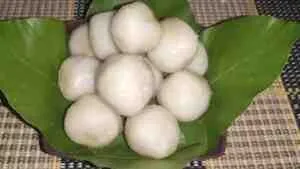
Food: Chhilka Pitha, Gud Pitha, Dudh Pitha, Chura-Dahi, Tilkut, sesame sweets, and other traditional foods made from newly harvested rice are prepared.
Dress: Girls wear colourful sarees and traditional jewellery, while boys wear dhoti or kurta.
Patterns/designs: Beautiful bamboo Choudal structures are decorated with colourful paper and flowers before the procession.
Songs: Traditional Tusu songs are sung by girls during the evening gatherings and the procession.
Mage parab
Mage Parab is an important festival of the Ho community. It is celebrated after the harvest season.
History: It marks the beginning of a new year and gives thanks for a successful harvest.
Current status: The festival is still celebrated in many families.
Food: Rice, Basi Bhat, Kurthi Dal, meat, vegetables, and Handia are commonly prepared.
Dress: Traditional sarees, dhoti, kurta, and tribal ornaments are worn.
Patterns/designs: Houses are cleaned and decorated, and the village gathering place is prepared for celebrations.
Songs: Traditional Ho folk songs are sung with Mandar and dhamsa, and villagers perform group dances.

Major festival and social significance
Sarhul is one of the biggest and most important festivals celebrated by the tribal communities of Turamdih. It is mainly celebrated by the Santhal, Ho, Munda, and other tribal communities. Sarhul is also known as the Festival of Flowers. It is usually celebrated during the spring season when the Sal trees begin to flower.
Sarhul is not only a religious festival. It is also a festival of nature, agriculture, community and social unity. Sarhul is closely connected with nature. The villagers worship nature and thank it for providing food, water, forests and other resources. The Sal flowers have special importance during the festival. The village priest performs traditional rituals at the Jaher Than, the sacred grove of the village. The festival shows the traditional belief that human life is closely connected with forests, trees, land, and water. The villagers pray for the protection of their village and for a good agricultural year.
Importance for agriculture
Sarhul also marks an important time in the agricultural cycle. Traditionally, villagers begin new agricultural activities after the Sarhul rituals. They pray for good rainfall, fertile soil and a good harvest. In the past, agriculture and nature were the main sources of livelihood in Turamdih. Therefore, Sarhul had a very important place in village life. Sarhul brings people together. During the festival, villagers gather at common places, meet relatives and friends, sing folk songs and perform traditional dances. People of different age groups take part in the celebrations. Traditional musical instruments such as the Mandar, Tumda and other drums are played during dancing and singing. The village becomes lively with music and community activities. During Sarhul, families prepare traditional food and share it with relatives and neighbours. Rice, vegetables, local dishes and other traditional foods are prepared according to the family’s customs. People also wear traditional clothes during the festival. Women may wear traditional sarees and decorate themselves with flowers. Men also wear traditional clothes and sometimes decorate their heads with flowers or leaves.
Changes in Sarhul today
Sarhul is still celebrated in Turamdih, but some changes can be seen compared with the past. Earlier, celebrations were more closely connected with the village forest, agriculture and traditional community life. People mainly used traditional musical instruments and folk songs. Today, modern sound systems, recorded music and changing lifestyles have become part of many celebrations. Young people are also influenced by modern culture. However, traditional dancing, singing, worship and community gatherings are still important parts of Sarhul. The most important social meaning of Sarhul is that it unites the village. It helps the younger generation learn about their traditional culture, beliefs, songs, dances and relationship with nature.
For the people of Turamdih, Sarhul is therefore more than a festival. It is a way of preserving their tribal identity, traditions and community relationships. It reminds villagers of the importance of protecting nature and respecting the land and forests on which their ancestors depended.
Analysis
From the information collected from villagers, I understand that Sarhul continues to have an important place in Turamdih’s social and cultural life. Although the village has changed because of modernization and industrial development, the festival helps people remain connected to their traditional culture and to one another.
Social relations: past and present
In the past, social relations among the villagers of Turamdih were very close and based on cooperation and mutual help. People depended on each other in their daily life. The village community was more united, and important events were usually celebrated together. Earlier, villagers helped one another in farming, house construction, collecting forest products, and other work. When a family needed help, neighbours and relatives came forward without expecting payment. This tradition of voluntary community work can be called Shramdaan. Weddings, births and funerals were not considered only family matters. The whole village participated in these occasions. People helped with cooking, arrangements and other responsibilities. This created strong relationships between families. Festivals were also important for maintaining social unity. During festivals such as Sarhul, Karam and Sohrai, villagers gathered at common places, sang folk songs and performed traditional dances. The Akhra, or village dancing ground, was an important place where people met and spent time together.
Cooperation between different communities
Different communities living in Turamdih had their own customs and traditions, but they generally maintained friendly relations. People visited each other’s homes and participated in social and cultural activities. In the past, forests, water sources and agricultural land were closely connected with community life. People depended on these resources together, which increased cooperation among villagers.
Changes after industrialization
With the development of mining and industrial activities, the social and economic life of the village gradually changed. Land acquisition, employment changes and movement of people affected traditional village relationships. Earlier, most families depended on agriculture, forests and traditional occupations. Today, many people depend on wage labour, jobs, business and other sources of income. As a result, people have become more focused on their individual work and family needs. The arrival of industrial workers and people from different places has also made the village more diverse. This has brought new languages, lifestyles and ideas into village life.
Changes in community cooperation
The traditional system of helping each other is still present, but it has become weaker in some areas. Earlier, villagers regularly worked together for common needs. Today, people may hire workers or depend on government and private services instead. Young people are also more connected with education, mobile phones, television and the internet. Because of this, traditional gatherings, folk activities and informal meetings have decreased to some extent.
Economics differences
Industrial development has also created differences in employment and income. Some families have obtained jobs connected with UCIL or other industries, while others continue to depend mainly on agriculture, daily wage work or small occupations. These differences have sometimes created competition and disagreements among villagers, especially regarding employment opportunities and compensation. However, villagers continue to come together when there are common problems affecting the whole community.
A new form of unity
Although traditional community life has changed, villagers can still unite when they face common problems. Issues related to roads, water, land, employment, and the environment can bring people together. Thus, the village has developed a new form of community cooperation. Earlier, people mainly came together for farming, festivals and social events. Today, they may also come together to discuss common village problems and demand improvements.
Analysis
From the information collected from villagers, it can be understood that social relations in Turamdih have changed from a strongly collective way of life to a more individual and modern lifestyle. In the past, mutual help, shared responsibilities, festivals and traditional customs played a major role in maintaining unity. Today, education, employment, mining, technology and urban influence have changed people’s lifestyles. However, the traditional feeling of community has not completely disappeared. People still help one another during festivals, marriages, funerals and difficult situations. Therefore, the social life of Turamdih has changed with time, but cooperation and community identity still remain important parts of village life.
Traditional dispute resolution
In Turamdih village, people worship a Gram Devta (Village Deity) under a Jamun tree. This place is considered sacred by the villagers. The villagers traditionally visit the place and offer prayers to the Gram Devta for the protection and well-being of the village. According to the villagers, in the past, the Gram Devta was worshipped very regularly, even on a daily basis. People had strong faith in the deity and considered the place an important part of their everyday village life. With time, however, this practice has changed. Today, villagers do not worship the Gram Devta every day. Puja is mainly performed during important festivals and special occasions. This change is connected with the changing lifestyle of the villagers and the influence of modernization. Even though regular worship has decreased, the Gram Devta and the Jamun tree continue to have cultural and religious importance in the village. The place reminds the older generation of the traditional practices followed by their ancestors.
Villagers memory
The older villagers remember that people had a much stronger connection with the Gram Devta in the past. They believe that worshipping the deity brought peace, protection and well-being to the village. Today, although daily worship has reduced, villagers continue to respect the Gram Devta and perform traditional puja during important festivals. This shows that the traditional belief has not disappeared completely but has changed with time.
Analysis
From the information collected from villagers, it can be understood that the Gram Devta under the Jamun tree is an important part of Turamdih’s local cultural history. The change from daily worship in the past to festival-based worship today shows how modernization and changing lifestyles have affected traditional religious practices. However, the continued respect for the Gram Devta shows that this tradition still remains an important part of the village’s cultural identity.
Village deities and traditional beliefs
In Turamdih village, the Gram Devta (Village Deity) is worshipped under a Jamun tree. This place is considered sacred by the villagers. People believe that the Gram Devta protects the village and its people and brings peace and well-being to the community.
According to the villagers, the Gram Devta was worshipped very regularly in the past. Older villagers remember that people used to visit the place and offer prayers almost every day. The Gram Devta was an important part of everyday village life. People believed that worshipping the deity would protect their families, cattle, crops and the whole village from difficulties.
The tradition of worshipping the Gram Devta has been passed from one generation to another. The exact origin story of the deity is mainly preserved through the memories and oral traditions of the older villagers. The Jamun tree under which the deity is worshipped is also considered an important sacred place. Villagers respect the tree and the place because it has been connected with the Gram Devta for a long time.
Prayer during times of crisis
In the past, when the village faced difficult situations such as poor rainfall, crop problems, diseases or other serious difficulties, villagers would pray to the Gram Devta for protection and relief. They would gather at the sacred place under the Jamun tree and perform traditional puja. Offerings were made according to the village custom, and villagers prayed for the well-being of everyone. The purpose of these prayers was to ask the Gram Devta to protect the village, keep people healthy, provide good rainfall and ensure a good harvest.
Changes in the present
The practice of worship has changed over time. Earlier, villagers worshipped the Gram Devta very regularly, and some villagers remember daily worship. Today, the puja is mainly performed during important festivals and special occasions. Although daily worship has decreased, villagers still respect the Gram Devta and consider the place sacred. The tradition continues through festival celebrations and the participation of villagers.
Analysis
From the information collected from villagers, it can be understood that the Gram Devta is an important part of Turamdih’s traditional cultural life. The worship under the Jamun tree connects the present generation with the beliefs and practices of their ancestors. The reduction in regular worship shows that village traditions are changing with modernization and changing lifestyles. However, the continued worship during festivals shows that the belief in the Gram Devta is still alive and remains an important part of the cultural identity of Turamdih.
Community pujas and changing beliefs
According to the older villagers of Turamdih, people in the past faced natural difficulties with the help of natural water sources, traditional practices, and community cooperation. Modern water-supply facilities were not available like they are today, so villagers depended more on the natural resources around them.
During droughts
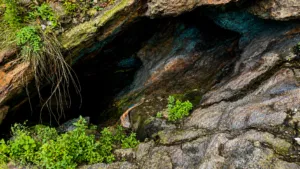
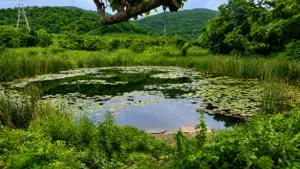
Older villagers remember that during periods of drought, when ponds and other usual water sources had very little water, people used to collect water from a natural place locally known as gupha. Gupha is a cave-like natural water source surrounded by rocks. During droughts, villagers would go to gupha to collect water for their daily needs. It was an important source of water when other sources were not sufficient. People had to make efforts to reach the place and bring water back to their homes.
Figure: Gupha – an old natural water source used by villagers during droughts. Today, villagers no longer depend on gupha for their regular water needs. The village now receives water through water tanks, which have become an important source of water for the villagers.
Community support during difficult times
In the past, villagers also helped one another during water shortages and other natural difficulties. People shared available resources and supported families who were facing greater problems. Traditional prayers and worship of the Gram Devta were also part of the villagers’ response to difficult situations, especially when there was a lack of rainfall.
Analysis
The memories of the older villagers show that people in the past were closely dependent on natural water sources. Goppa was an important source of water during droughts and represents the traditional knowledge of the villagers about their natural surroundings.
The change from collecting water from Goppa to using water supplied through tanks shows how the village’s water system has changed over time. Although modern water facilities have made access to drinking water easier, the story of Goppa remains an important part of Turamdih’s local history and memories.
Life-cycle rituals and traditions
According to the older villagers, birth, marriage and death were important events in the traditional life of Turamdih. These occasions were not limited to one family. Relatives, neighbours and other villagers participated and helped the family. Traditional food, clothing, rituals and community support were important parts of these ceremonies.
Birth rituals
The birth of a child was considered a happy and important occasion. According to older villagers, after the birth, the family observed a period of ritual restrictions for several days. This period was followed by a traditional ceremony and the naming of the child.
The naming ceremony was performed with the help of elders or a traditional religious person. The names of ancestors were remembered, and traditional beliefs were followed while choosing the child’s name. In this way, the newborn was connected with the family and its ancestors.
Clothing: The newborn was traditionally wrapped in a clean, simple cotton cloth. The mother also wore a simple traditional cotton saree.
Food: After the birth, family members prepared simple food for relatives and visitors. Rice, dal and other locally available foods were commonly served. Traditional rice-based drinks were also prepared for community occasions according to local customs.
Marriage rituals
Marriage, traditionally known as Andi in some local traditions, was an important community celebration. In the past, the whole village could become involved in the preparations. Relatives and neighbours helped with cooking, decorations and other arrangements.
The wedding ceremony was traditionally held in a decorated space using natural materials such as Sal and Mahua leaves. Elders and traditional leaders played an important role in conducting the ceremony.
Bride’s dress: The bride traditionally wore a handwoven saree, often with red and white colours. Traditional ornaments, bangles, necklaces and flowers were used for decoration.
Groom’s dress: The groom traditionally wore a dhoti or simple cotton clothing, sometimes with a traditional cloth around the shoulder or head.
Food: The wedding feast was prepared collectively. Rice, dal, vegetables, meat and other locally available foods were served. Food was traditionally served on Sal-leaf plates and bowls. In some traditional celebrations, Handia was also prepared and shared among adults according to community customs.
Music and dance: Traditional drums such as the Mandar were played during marriage celebrations. People sang traditional songs and danced together, making the wedding a community celebration.
Death and funeral rituals
Death was treated with great respect and seriousness. When someone died, relatives, neighbours and villagers came together to support the bereaved family. According to older villagers, traditional funeral practices were followed under the guidance of elders and knowledgeable members of the community. In some traditional tribal practices, the deceased was buried and later memorial stones were placed to remember the person and connect them with the ancestors.
The Sasandiri tradition, where a stone is associated with the memory of the deceased, reflects the importance of ancestors in tribal cultural traditions.
Clothing: During mourning, family members generally wore simple and plain clothes. Traditional ornaments were avoided during the mourning period.
Food: Food during mourning was kept simple. Relatives and neighbours helped the family with cooking and other household responsibilities. After the mourning period, a community meal could be organised according to the customs of the family and community.
Community participation: One of the most important features of these ceremonies was community participation. Births brought happiness, marriages brought people together for celebration, and deaths brought the community together to support the affected family.
Interview 1 – Rajendra Nayak , age – 50 , gender – male , community – Nayak , occupation – farmer / civil worker
According to Rajendra Nayak, Turamdih is an old village surrounded by hills, forests, and natural areas. He said that the village has changed a lot over time. In the past, the surroundings were greener, and people depended more on natural resources such as forests, ponds, and agricultural land. He also explained that the growth of mining and industrial activities has brought many changes to the village and its environment. According to him, the history and development of Turamdih are closely connected with the lives and experiences of the villagers.
Analysis
The memories of older villagers show that birth, marriage and death were important social and cultural occasions in Turamdih. These events strengthened relationships between families and neighbours. Traditional clothing, local food, music, dance, natural materials and community participation connected everyday life with the village’s cultural heritage.
Over time, some practices have changed because of education, modern employment, changing lifestyles and outside influences. However, many traditional customs are still remembered and practiced during important family and community occasions. These traditions are therefore an important part of Turamdih’s cultural identity and oral history.
Agriculture & food
Interview 2 – Sindhu Nayak , age – 50, gender – female , community – Nayak , occupation – farmer
According to Sindhu Nayak, agriculture was an important part of life in Turamdih in the past. Villagers mainly cultivated crops such as paddy, madua (finger millet), maize, and different pulses. He said that people also collected various forest products and used them as food. Traditional foods were prepared from locally available crops and included rice, madua roti, and other simple village dishes. With changes in the environment and the growth of mining activities, agriculture has gradually declined, and people have become more dependent on the market for food.
Past crops and foods
In the past, agriculture in Turamdih village was completely traditional, organic, and dependent on the monsoon. The villagers divided their farmland into uplands (Gora land) and lowlands (Bera land) according to the type of crops they wanted to grow. Rice (paddy) was the main crop and was cultivated in the low-lying fields, while drought-resistant hill paddy was grown on the slopes. In the dry uplands, farmers cultivated nutritious millets such as Madua (Finger Millet/Ragi), Gondli (Little Millet), and Bajra (Pearl Millet), which required very little water. They also grew pulses like Kurthi (Horse Gram), Arhar (Pigeon Pea), Urad, and Moong. Mustard and Niger seed (Sarguja) were cultivated for oil. Almost every household had a Bari (kitchen garden) where seasonal vegetables such as pumpkin, bottle gourd, brinjal, chilli, and other vegetables were grown.
The daily food of the villagers was simple, healthy, and mostly prepared from crops grown on their own farms and food collected from nearby forests. Rice was the staple food. A common breakfast was Basi Bhat (rice soaked overnight in water), eaten with salt, green chillies, or onions. Freshly cooked rice with dal, vegetables, and Maar (rice starch water) was usually eaten for lunch and dinner. Madua Roti and Leto (a thick porridge made from millet or rice flour) were also common. People regularly ate local leafy vegetables such as Koynar Saag, Munga Saag, Sanai Saag, and Chakod Saag. During summer, dried leafy vegetables (Sukti Saag) were stored for later use. Kurthi Dal was an important source of protein, especially during winter. The surrounding forests provided Mahua flowers, Kendu fruits, Piyar (Chironji), Jamun, and wild mushrooms such as Rugra and Putu. Small fish, crabs, and snails collected from ponds, streams, and paddy fields were also part of the daily diet. Hadia, a traditional fermented rice beverage, was commonly consumed in moderation after a day’s work in the fields.
Analysis
The traditional farming system and food habits of Turamdih village were closely connected with nature. People depended on locally grown crops, forest resources, and seasonal foods, which made their diet nutritious, sustainable, and environmentally friendly. Although many of these traditions still exist, modern agriculture, mining activities, and changing lifestyles have reduced the cultivation and consumption of several traditional crops and foods.
Past vs present crops
In the past, agriculture was the main occupation of the people of Turamdih village. Farmers cultivated a wide variety of crops, including paddy (rice), Ragi (Finger Millet), Kodo, Suan (Little Millet), maize, pulses, mustard, and seasonal vegetables. Farming was completely traditional and organic. Farmers used native seeds, cattle manure, and depended mainly on rainfall. Both uplands (Gora land) and lowlands (Bera land) were cultivated, and villagers worked together during sowing and harvesting.
Today, agriculture has changed considerably. Most farmers now cultivate only paddy during the monsoon season, while many traditional crops have almost disappeared. The use of chemical fertilizers and improved seeds has increased, and many young people have shifted from farming to mining, industrial work, or other occupations. Agricultural land has also decreased because some land was acquired for industrial and mining-related development.
Why have Ragi, Kodo, and Suan declined?
The decline of traditional millet crops has several causes. According to the villagers interviewed, a major reason is the reduction of upland (Gora land), which is suitable for growing these crops. Many farmers also stated that after the establishment of the Uranium Corporation of India Limited (UCIL), agriculture became more difficult because water availability decreased and some agricultural land was lost for mining activities.
Villagers further explained that subsidized rice supplied through the Public Distribution System (PDS) changed people’s food habits, reducing the demand for traditional millets. Processing Ragi, Kodo, and Suan is also time-consuming and requires more labour than rice. Since many young people now work in industries and mines, fewer family members are available for farming. As a result, farmers prefer to cultivate only paddy, which is easier to manage and has a more stable market.
Analysis
The comparison shows that Turamdih has changed from a village with diverse traditional agriculture to one where farming mainly depends on paddy cultivation. According to the villagers, reduced agricultural land, shortage of water, changing food habits, labour shortages, and the expansion of mining activities have all contributed to the decline of Ragi, Kodo, and Suan. These traditional millets are nutritious, require less water, and are well suited to the local climate. Promoting their cultivation again can help improve nutrition, strengthen food security, and preserve the agricultural heritage of the village.
Past food habits
In the past, the people of Turamdih village mainly depended on agriculture and forest resources for their food. Their diet was simple, nutritious, and prepared from locally available ingredients. Rice was the staple food of the village. A common breakfast was Basi Bhat(rice soaked overnight in water), eaten with salt, green chillies, or raw onions. It helped keep the body cool and provided energy for farm work. For lunch and dinner, people ate freshly cooked rice with Maar (rice starch water), dal, and seasonal vegetables. Traditional grains such as Ragi (Finger Millet/Madua), Kodo, Gondli, and Suan (Little Millet) were also important parts of the daily diet. People prepared Madua Roti and Leto (a thick porridge made from millet or rice flour with pulses or leafy vegetables), which provided strength for long hours of physical labour.
Local leafy vegetables such as Munga Saag (Drumstick leaves), Koynar Saag, Sanai Saag, and Chakod Saag were commonly eaten. During the rainy season, women dried these leafy vegetables to prepare Sukti Saag, which was stored and eaten during the dry months. Pulses such as Kurthi (Horse Gram), Arhar, Urad, and Moong were regularly consumed. Kurthi Dal was especially popular during winter because it helped keep the body warm and provided strength.
The nearby forests supplied many seasonal foods, including Mahua flowers, Kendu fruits, Jamun, Piyar (Chironji), and wild mushrooms such as Rugra and Putu. Villagers also caught small fish, crabs (Katkom), and snails from ponds, streams, and paddy fields. Hadia, a traditional fermented rice beverage, was consumed in moderation during festivals and after agricultural work.
According to the villagers interviewed, the traditional diet was healthier and more diverse than today’s diet. They explained that many traditional foods have become less common because of changing food habits, reduced cultivation of millets, declining forest resources, and other changes in agriculture and livelihoods.
Analysis
The traditional food culture of Turamdih reflected a close relationship between agriculture, forests, and daily life. The use of millets, pulses, leafy vegetables, forest produce, and fresh local foods provided balanced nutrition and supported a healthy lifestyle. Preserving these traditional food practices is important for protecting the village’s cultural heritage and promoting sustainable nutrition.
Changes in food habits
According to the villagers interviewed, the eating habits of Turamdih village began to change gradually from the late 1990s and early 2000s. Earlier, almost every family depended on agriculture and nearby forests for their daily food. They regularly ate rice, Basi Bhat, Ragi (Finger Millet/Madua), Kodo, Suan (Little Millet), Kurthi Dal, seasonal vegetables, local leafy greens, Mahua flowers, wild mushrooms (Rugra and Putu), Kendu fruits, Jamun, and other forest produce. Most meals were prepared at home using traditional methods, and very little food was purchased from the market.
Over the years, food habits changed because of several social and economic reasons. The availability of subsidized rice and wheat through the Public Distribution System (PDS), easier access to market foods, changing lifestyles, and reduced cultivation of traditional crops encouraged people to depend more on polished rice, wheat flour, packaged foods, and market vegetables. Many young people also started working in industries, mining-related jobs, and other occupations, leaving less time for traditional farming and cooking.
Several villagers also stated that changes in agriculture and the expansion of the Uranium Corporation of India Limited (UCIL) mining activities affected farming in the area. According to them, some agricultural land was acquired for mining-related development, water became less available for cultivation, and the production of traditional crops gradually declined. As a result, many families became more dependent on food purchased from local markets instead of food grown in their own fields.
Traditional recipe 1– Basi Bhat (fermented rice)
Ingredients
- 2 cups cooked rice
- Clean drinking water
- Salt (to taste)
- Green chillies
- Raw onion (optional)
Method
Cook rice in the evening and allow it to cool.
Place the cooked rice in an earthen pot or a clean bowl.
Add enough clean drinking water to cover the rice.
Leave it overnight at room temperature.
The next morning, serve the soaked rice with salt, green chillies, and raw onion.
Important
Basi Bhat was the most common traditional breakfast in Turamdih. Farmers and labourers ate it before going to the fields because it kept the body cool during hot weather and provided energy for long hours of physical work.
Basi Bhat
Traditional recipe 2– Kurthi Dal (horse gram soup)
Ingredients
- 1 cup Kurthi (Horse Gram)
- 4 cups water
- 4–5 garlic cloves (crushed)
- ½ teaspoon turmeric powder
- Salt to taste
- 1 teaspoon mustard oil
Method
Wash the Kurthi thoroughly and soak it for a few hours.
Boil it until the grains become soft.
Add crushed garlic, turmeric powder, and salt.
Cook for another 10–15 minutes.
Add a small amount of mustard oil before serving.
Important: Kurthi Dal was an important traditional food, especially during winter. It was rich in protein and gave strength to farmers and labourers. It was usually eaten with hot rice and was believed to keep the body warm.
Analysis
The interviews show that the eating habits of Turamdih have changed considerably over the past few decades. Earlier, families depended mainly on food grown in their own fields and collected from nearby forests. Today, many households rely on rice from the Public Distribution System (PDS) and food purchased from local markets. According to the villagers, changing lifestyles, reduced cultivation of traditional crops, and changes in agriculture, including those associated with mining activities in the area, have influenced this shift. Traditional foods such as Basi Bhat and Kurthi Dal remain important symbols of the village’s cultural heritage and represent a healthy, sustainable, and self-reliant way of life.
Livelihoods and income: In the past, agriculture was the main source of livelihood in Turamdih village. Most families depended on farming, cattle rearing, forest produce, and fishing for their daily needs. They cultivated paddy, millets, pulses, and vegetables and were largely self-sufficient.
Today, the livelihood pattern has changed significantly. Although some families still practise agriculture, farming alone is no longer enough to support a household. According to the villagers interviewed, many people now work as contract labourers or employees in and around the Uranium Corporation of India Limited (UCIL). Others earn their living as daily wage labourers, construction workers, drivers, security guards, shop assistants, cleaners, mechanics, and factory workers in nearby Jamshedpur. Some villagers run small grocery shops, tea stalls, vegetable stalls, or repair shops. Women also contribute to the family income through Self-Help Groups (SHGs), tailoring, poultry farming, goat rearing, and selling vegetables or other local products.
Families who still own agricultural land mainly cultivate paddy during the monsoon season for household consumption. Only a few farmers are able to earn additional income by selling agricultural produce.
Is the income enough to sustain a family?
According to the villagers interviewed, the income of most families is not sufficient to meet all household expenses. Many people work on temporary or contract jobs, which provide limited income and little job security. Families have to spend money on food, education, healthcare, electricity, transportation, and other daily needs. Unlike the past, when most food came from their own farms and forests, many households now depend on purchasing essential items from the market.
Several villagers also explained that changes in agriculture and the expansion of mining activities have reduced farming opportunities. Some agricultural land has been acquired for development, and farming has become more difficult because of reduced water availability and changing environmental conditions. As a result, many families have shifted from farming to wage labour and other occupations.
Some young people migrate to nearby cities or other states in search of better employment. While regular jobs in industries and factories have improved the income of a few families, many households still face financial difficulties because of rising prices and irregular employment.
Analysis
The interviews show that the livelihood pattern of Turamdih has changed from a self-sufficient agricultural economy to a mixed economy based on farming, wage labour, mining-related employment, small businesses, and self-employment. According to the villagers, agriculture alone is no longer enough to support a family, and many households depend on more than one source of income. Creating stable employment opportunities, strengthening agriculture, improving irrigation, and supporting small businesses can help improve the economic condition of the village while preserving its traditional way of life.
Culture
Interview 3 – Anita Mahato , age – 30 , gender – female , community – Mahato , occupation – homemaker
According to Anita Mahato , the culture of Turamdih is closely connected with the traditions and customs of the village communities. People celebrate festivals such as Sarhul, Sohrai, Karam Puja, and Mage Parab. Traditional songs, dances, and rituals are also an important part of village life. He explained that elders play an important role in passing cultural traditions and knowledge to the younger generation. However, with changing lifestyles and modern influences, some traditional practices are becoming less common among the younger people.
Cultural festivals
Turamdih village, located in East Singhbhum district of Jharkhand, has a rich cultural heritage. The village is home to tribal communities such as the Ho, Santhal, and Munda, along with other communities who live together peacefully. The festivals celebrated in the village are closely connected with nature, agriculture, and community life. These celebrations help preserve traditional customs, strengthen social relationships, and pass cultural values from one generation to the next.
Sarhul festival
Sarhul is one of the most important festivals celebrated in Turamdih. It is observed during March or April and marks the beginning of the new year according to the tribal tradition. During this festival, the villagers worship nature, especially the Sal tree, and offer prayers to Marang Buru and Jaher Era (Jaher Ayo) for good rainfall, a successful harvest, good health, and peace.
The village priest (Pahan) performs the rituals at the Sarna Sthal (sacred grove). Men and women wear traditional dresses, decorate themselves with Sal flowers, and perform traditional dances to the beats of the Dhol, Mandar, and Nagara. Families prepare traditional food and celebrate together.
Sohrai festival
Sohrai is the harvest festival celebrated after the paddy harvest, usually after Diwali. It is also known as the festival of cattle because villagers express gratitude to their cows and oxen, which help in farming. The animals are washed, decorated, and worshipped.
Women decorate the walls of their houses with beautiful Sohrai paintings using natural colours made from soil and clay. Families prepare traditional dishes, invite relatives, and celebrate with music, dance, and community feasts.
Karam festival
HiKaram is celebrated during August or September. It is especially popular among young people. During this festival, villagers bring branches of the Karam tree from the forest and worship them as a symbol of prosperity, good fortune, and family well-being.
Young men and women sing traditional Karam songs and dance throughout the night. Unmarried girls also perform rituals and pray for the happiness and prosperity of their families.
Mage parab
Mage Parab is an important festival of the Ho community. It is celebrated after the harvest season and marks the beginning of a new agricultural cycle. Villagers offer prayers to their ancestors and village deities, prepare traditional food, visit relatives, and participate in community feasts. Traditional music and dance are an important part of this celebration.
Tusu parab
Tusu Parab is one of the most colourful harvest festivals celebrated in Turamdih and nearby villages. It is observed during the month of Poush and concludes on Makar Sankranti in January.
The festival begins after the paddy harvest. Young girls establish the symbol of Goddess Tusu in a small earthen pot decorated with flowers and rice. Every evening they gather together to sing traditional Tusu songs, pray, and celebrate the harvest.
A few days before Makar Sankranti, young men prepare a beautifully decorated bamboo structure called a Choudal, which is decorated with colourful paper and flowers. On the day of Makar Sankranti, villagers take a holy bath in nearby rivers or ponds, wear traditional clothes, and prepare delicious traditional foods such as Chhilka Pitha, Gud Pitha, Dudh Pitha, Basi Bhat, and Kurthi Dal.
In the afternoon, the entire village joins a colourful procession with singing, dancing, and traditional drums. The Choudal and the symbol of Goddess Tusu are taken to the river for immersion. The celebration continues with Tusu Melas, where people enjoy folk songs, handicrafts, local food, and traditional games.
Chini pitha
Gud pitha
Chicken pitha
Other festivals and cultural events
Apart from tribal festivals, the villagers also celebrate Durga Puja, Kali Puja, Chhath Puja, Holi, Diwali, Independence Day, Republic Day, and local school programmes. Weddings, naming ceremonies, and other family celebrations are also important cultural events where traditional music, dance, and customs are followed.
Throughout the year, village fairs (Melas) are organised during major festivals. Local people sell agricultural products, bamboo crafts, tribal handicrafts, and traditional food. In some nearby areas, Chhau dance performances are also organised during festivals, attracting many visitors.
Analysis
The cultural festivals of Turamdih are much more than religious celebrations. They reflect the close relationship between nature, agriculture, and the everyday lives of the people. These festivals strengthen community unity, encourage cooperation, preserve traditional songs, dances, food, art, and customs, and pass cultural knowledge from elders to younger generations.
Although modern lifestyles and industrial development have brought many changes to the village, the people of Turamdih continue to celebrate their traditional festivals with pride. Preserving these festivals is important for protecting the cultural identity and heritage of the village for future generations.
Lost folk songs, dances and art
Turamdih village has a rich tribal culture. Earlier, folk songs, dances, and traditional art were an important part of everyday life. They were performed during festivals, weddings, harvest celebrations, and village gatherings. According to the villagers, many of these traditions are now disappearing because of modernization, migration, changing lifestyles, and the influence of television, mobile phones, and DJ music.
Disappearing folk dances: Earlier, the villagers performed many traditional dances such as Firkal Dance, Dasai Dance, Baha Dance, and Hero Dance.
- Firkal Dance was a traditional martial dance of the Bhumij community. Dancers used wooden swords and shields to perform. Today, this dance is rarely seen, and only a few elderly people remember it.
- Dasai Dance was performed during the Durga Puja season. The dancers wore peacock feathers and played traditional musical instruments. Today, it is performed only on a few special occasions.
- Baha Dance and Hero Dance were connected with the flower festival and the farming season. Earlier, the whole village gathered in the Akhra (village dancing ground), but today these dances are becoming less common because many young people work outside the village.
Disappearing folk songs: In the past, villagers sang traditional songs during Sarhul, Sohrai, Karam, Tusu, and marriage ceremonies.
- Binti was a traditional song that told stories about the ancestors, nature, and the history of the community. Today, very few elders remember these songs.
- Traditional Sohrai and Karam songs are still sung, but many people now use modern songs and DJ music instead of the original folk tunes.
Disappearing art forms: Earlier, women decorated the walls of mud houses with beautiful Sohrai paintings using natural colours made from clay and soil. As mud houses have been replaced by cement houses, this art is slowly disappearing. Villagers also made bamboo baskets, leaf plates (Dona and Pattal), and traditional musical instruments such as the Bhuang, Kendri, and Tuila. Today, very few people know how to make these items because factory-made products are easily available.
Analysis
The interviews show that many traditional folk songs, dances, and art forms of Turamdih are gradually disappearing. Modern lifestyles, migration, and the use of modern entertainment have reduced interest in these cultural traditions. It is important to preserve them through schools, cultural programmes, village festivals, and by encouraging young people to learn from the elders. These traditions are an important part of the history and identity of Turamdih village.
Village dance, musical instruments and traditions
Turamdih village has a rich tradition of folk music, dance, and tribal culture. The Ho, Santhal, Munda, and Bhumij communities have preserved these traditions for many generations. Music and dance are an important part of festivals, weddings, harvest celebrations, and religious ceremonies. These traditions bring the community together and express respect for nature, ancestors, and village customs.
Traditional dance forms
Several traditional dances are performed in the village during festivals and special occasions.
- Sarhul Dance is performed during the Sarhul festival to celebrate nature and welcome the new season.
- Sohrai Dance is performed after the harvest to express gratitude for a good crop and honour cattle.
- Karam Dance is performed by young men and women during the Karam festival. They dance together in the village Akhra while singing traditional songs.
- Tusu Dance is performed during Tusu Parab by girls and women.
- Some elders also mentioned traditional dances such as Lagren, Dong, Maghe, Hero, and Firkal, which were more common in earlier times but are now rarely performed.
Traditional musical instruments
Traditional music is played using handmade instruments such as:
- Mandar (Tumda’) – the most important drum used during festivals and dances.
- Dhol – played during celebrations and community gatherings.
- Nagara (Tamak’) – a large drum used during festivals.
- Bhuang – a traditional string instrument played during Dasai celebrations.
- Kendri – a traditional string instrument used for folk songs.
- Bansuri (Flute) – played during cultural programmes and village celebrations.
These instruments create the rhythm for traditional dances and folk songs.
Musical traditions
The people of Turamdih have a strong oral tradition of music. Folk songs are passed from one generation to another without being written down.
Traditional songs are sung during Sarhul, Sohrai, Karam, Tusu, weddings, and other village ceremonies. Elders also sing Binti, a traditional narrative song that tells the history of the community, the ancestors, and their customs. These songs teach young people about their culture and traditions.
Analysis
The interviews show that the traditional dance forms, musical instruments, and folk songs of Turamdih are an important part of the village’s cultural heritage. However, modernization, migration, and changing lifestyles have reduced the participation of the younger generation. Preserving these traditions through festivals, schools, and cultural programmes will help protect the identity of the village for future generations.
Village games
Games are an important part of village life in Turamdih. Earlier, children and young people spent most of their free time playing outdoor games. These games helped improve physical fitness, teamwork, and friendship. Today, some traditional games are still played, while others are becoming less common because many children spend more time using mobile phones and television.
List of games played in Turamdih village
The following games are commonly played in the village:
Football – The most popular game among the youth.
Cricket – Played by children and young people in open fields.
Kabaddi – A traditional team game played during festivals and sports events.
Kho-Kho – Played mainly by school children.
Gilli-Danda – A traditional game played with a small wooden stick and a longer stick.
Kancha (Marbles) – Children play this game using small glass marbles.
Rumal Chori (Handkerchief Game) – A popular group game played by children, especially during school and village gatherings.
Khit-Khit (Hopscotch) – A traditional game played mostly by girls using boxes drawn on the ground.
Hide and Seek – A favourite game among small children.
Archery (Teer-Dhanush) – Traditionally played by tribal communities during festivals and competitions.
Running and Relay Races – Organised during school sports and village festivals.
Wrestling (Kushti) – Earlier, young men played this game in the village, but it is less common today.
Analysis
The interviews show that traditional games were once an important part of daily life in Turamdih. Although football and cricket are still popular, games such as Kancha, Gilli-Danda, Rumal Chori, Khit-Khit, Kho-Kho, and Kabaddi are becoming less common. These traditional games are a valuable part of the village’s cultural heritage and should be encouraged among the younger generation to keep the traditions alive.
Village problems & public life
Interview 4 – Manoj Dandapat , age – 45 , gender – male , community – Dandapat , occupation – UCIL mines
According to Rajendra Nayak, the villagers face several problems related to water, roads, employment, health, and the environment. He said that mining and industrial activities have affected the natural environment and created concerns about water and soil. During summer, water problems can become more serious, and villagers depend on available water supply systems. He also mentioned that poor road conditions and heavy vehicles create difficulties for transportation. Employment is another important concern, as some people have to travel outside the village in search of work. According to him, better roads, clean drinking water, healthcare facilities, and more employment opportunities are needed for the development of the village.
Core problems of the village
1. Water problems
Drinking water situation
Water is one of the biggest problems in Turamdih village. According to the villagers interviewed, they no longer use water from most ponds, wells, or hand pumps for drinking because they believe the water has become polluted over the years. Many villagers said that they are concerned about the quality of underground water and therefore depend mainly on the drinking water supplied by the Uranium Corporation of India Limited (UCIL) through overhead water tanks and pipeline connections.
The villagers explained that a large tailings dam is located near the village. They believe that dust and waste from this area have affected nearby ponds and underground water sources. Many people also said that bathing in some ponds causes skin itching and irritation, so they avoid using pond water for bathing and drinking.
Water shortage during summer
The water problem becomes more serious during the summer season. According to the villagers, the water supply from the UCIL tank and pipeline does not come throughout the day and is available only at certain times. Families have to store water in drums and containers for daily use. When the supply is delayed, people face great difficulty in meeting their household needs.
Steps taken by the villagers: To manage the water problem, villagers store water whenever it is supplied. They use pipeline water for drinking and cooking and try to use water carefully to avoid wastage. Some families still use hand pumps for washing and other household work if water is available. The villagers have requested a regular water supply, better maintenance of the pipeline system, and safer drinking water facilities.
Analysis
The interviews show that access to safe drinking water is one of the most serious challenges in Turamdih village. According to the villagers, concerns about the quality of pond and groundwater, together with limited water supply during summer, have changed the way families obtain and use water. A regular supply of safe drinking water, improved water infrastructure, and continued monitoring of local water quality would help improve the health and well-being of the community.
Forest and hills
According to the villagers, Turamdih village was once surrounded by thick forests and small hills. The forests had many trees such as Sal, Mahua, Kendu, Bamboo, Kusum, and Palash. The tribal communities lived in close relationship with nature and depended on the forest for their daily needs.
Today, the forest area has decreased significantly. Large parts of the forest have been cleared for mining, roads, industries, and other development work. According to the villagers, only small patches of forest remain around the village.
Why has the forest decreased?
The villagers said that the forest has decreased mainly because of:
- Expansion of UCIL (Uranium Corporation of India Limited) mining projects.
- Construction of roads, buildings, and workers’ colonies.
- Cutting of trees for development.
- Mining waste (overburden) and tailings areas.
- Increasing population and expansion of settlements.
These activities have changed the natural environment of the village.
What did people collect from the forest?
Earlier, the villagers collected many useful products from the forest, such as:
- Firewood for cooking.
- Mahua flowers and Mahua seeds.
- Kendu fruits and leaves.
- Sal leaves for making Dona and Pattal.
- Honey from wild bees.
- Wild mushrooms (Rugra and Putu).
- Medicinal herbs and roots.
- Bamboo for making baskets and household items.
- Wild fruits, roots, and green leafy vegetables.
Many families also sold forest products in the local market to earn extra income.
Impact of forest reduction on the villagers
The reduction of forests has affected the lives of the villagers in many ways.
- Forest products have become difficult to find.
- Many families have lost an important source of food and income.
- Women have to walk longer distances to collect firewood.
- Wildlife and medicinal plants have decreased.
- According to the villagers, mining and deforestation have also affected the environment, including air, water, and soil.
- Many people shifted from farming and forest-based livelihoods to daily wage labour and mining-related work.
- Some families lost agricultural and forest land because of mining expansion.
Analysis
The interviews show that forests were once an important part of life in Turamdih village. They provided food, fuel, medicine, and income to the villagers. According to the villagers, the expansion of mining, development activities, and tree cutting have reduced the forest area and changed their traditional way of life. Protecting the remaining forests and planting more trees will help preserve both the environment and the cultural heritage of the village.
3. Environmental changes
According to the villagers, yes, soil fertility has declined. Earlier, the land was fertile, and farmers could grow paddy, millets, pulses, and vegetables without much difficulty. Today, crop production has decreased. Many villagers believe that dust from the UCIL (Uranium Corporation of India Limited) mines, mining activities, and polluted water have affected the quality of the soil. Farmers now use more chemical fertilizers, but the harvest is still lower than before.
Has the taste and quantity of rainwater changed?
The villagers said that rainfall has changed over the years. Earlier, the monsoon was regular, and ponds, wells, and hand pumps remained full for a long time. Today, rainfall is irregular. Sometimes there is very heavy rain, while at other times there are long dry periods.
The villagers also said that the quality of water has changed. During the rainy season, water from the mining area and tailing dam mixes with nearby ponds and underground water sources. Many people say the water has a strange smell, a yellowish colour, or a metallic taste. Because of this, most families now depend on the UCIL water tank for drinking water.
Are there visible changes in wind and weather patterns?
The villagers have noticed several changes in the local weather.
- Summers are hotter than before.
- Rainfall has become uncertain and irregular.
- Dust from the UCIL mining area spreads through the air, especially during the dry season.
- Strong winds carry dust into the village.
- Winters are shorter, and the weather has become less predictable.
Many villagers believe these changes have made farming more difficult and have affected their health.
UCIL tailing dam near Turamdih village
Analysis
The interviews show that the villagers have observed major environmental changes in Turamdih. According to them, soil fertility has declined, rainfall has become irregular, natural water sources have become polluted, and the local climate has changed. The villagers believe that mining activities, deforestation, and environmental pollution have affected agriculture, water resources, and their overall quality of life.
Livelihood & employment
Earlier, most people in Turamdih village depended on agriculture, forest products, fishing, and animal husbandry for their livelihood. Today, because of mining and industrial development, many people have shifted to different kinds of work.
The main occupations in the village are:
- Farming (mainly paddy cultivation during the rainy season)
- Daily wage labour
- Contract work in UCIL (Uranium Corporation of India Limited) and nearby industries
- Mason (construction worker)
- Carpenter
- Blacksmith
- Fisherman
- Small shopkeepers and vegetable sellers
- Drivers and helpers
- Painters
- Tailors
- Women also earn income by making leaf plates (Dona and Pattal), collecting forest products, and doing agricultural work.
Some traditional occupations, such as making bamboo products and traditional musical instruments, are now very rare.
Is the income sufficient to sustain a family?
According to the villagers, the income is not enough for most families.
Most workers are employed on daily wages or short-term contracts. Their income is often irregular and depends on the availability of work. Many families find it difficult to meet expenses such as food, education, healthcare, electricity, and transportation.
Farmers also face problems because crop production has decreased, and many families have lost agricultural land due to mining and development. As a result, they depend more on wage labour than farming.
Analysis
The interviews show that the livelihood pattern of Turamdih has changed over time. Agriculture is no longer the main source of income for many families. Most people now depend on daily wage work, construction, contract jobs, or small businesses. According to the villagers, the income from these occupations is generally not sufficient to comfortably support a family because of irregular employment, rising prices, and increasing household expenses.
Education
According to the villagers, there was no school in Turamdih many years ago. Children who wanted to study had to walk to nearby villages or schools that were several kilometres away. Many children could not continue their education because of the long distance, lack of transport, and poor financial condition of their families. Some children studied only up to the primary level and then dropped out.
Today, there are schools near the village, and more children are able to attend. However, some families still face difficulties in providing higher education to their children.
Are there children who cannot study? Why?
The villagers said that yes, some children are still unable to continue their education. The main reasons are:
- Poverty and low family income.
- Parents cannot afford school expenses, books, uniforms, or transport.
- Some children leave school to support their families.
- Lack of awareness about the importance of education in a few families.
- Some students stop studying after secondary school because colleges are far away or the cost of higher education is high.
What work do these children do instead of studying?
According to the villagers, children who leave school often help their families by:
- Working in agriculture during the farming season.
- Looking after cattle and goats.
- Working as daily wage labourers.
- Helping in family shops or small businesses.
- Doing household work and taking care of younger brothers and sisters.
- Some older children also go to nearby towns for small jobs or construction work.
Analysis
The interviews show that education in Turamdih has improved over the years. Earlier, the absence of a village school made education difficult. Today, more children are attending school, but poverty and financial problems still prevent some children from completing their studies. The villagers believe that better educational support and financial assistance can help every child receive a good education.
Migrant labor
According to the villagers, only a few people migrate to other states for work. Most people prefer to stay in the village or nearby areas. Many villagers work in UCIL (Uranium Corporation of India Limited), either as permanent employees or contract workers. Others work in Jamshedpur as daily wage labourers, drivers, masons, painters, shop workers, or security guards.
To which states do they go?
Only a small number of people who cannot find regular work in the village or nearby areas migrate to states such as Odisha, West Bengal, Gujarat, or Maharashtra. They usually return to the village after a few months.
What kind of work do they do?
Those who migrate usually work as:
- Construction workers
- Factory workers
- Daily wage labourers
- Mason helpers
- Industrial workers
However, most villagers work in UCIL, nearby industries, agriculture, or in Jamshedpur instead of migrating to other states.
What is the root cause of migration?
According to the villagers, the main reasons are:
- Lack of permanent jobs.
- Low income from farming.
- Some families lost agricultural land because of mining and development.
- Better wages outside the village.
Analysis
The interviews show that migration is not very common in Turamdih village. Most people work in UCIL, agriculture, or nearby Jamshedpur. Only a few villagers migrate to other states when they are unable to find stable local employment. The villagers believe that if more permanent jobs are available locally, migration will reduce further.
(B) Social life
Turamdih village is home to different communities such as Santhal, Ho, Munda, Mahato, Nayak, and other families. According to the villagers, people live together peacefully and help each other in their daily lives. They work together in agriculture, attend village meetings, and support each other during weddings, funerals, and other social occasions.
The villagers also said that after the establishment of UCIL (Uranium Corporation of India Limited), some people got jobs in the company while others continued farming or worked in Jamshedpur. Although people’s occupations have changed, the relationship among different communities remains friendly and cooperative.
Do all communities celebrate festivals together?
Yes. According to the villagers, people from different communities celebrate many festivals together.
Tribal festivals such as Sarhul, Karam, Sohrai, Mage Parab, and Tusu Parab are celebrated with great joy. During these festivals, people perform traditional dances, sing folk songs, prepare special food, and gather at the village Akhra or community ground.
People also celebrate Durga Puja, Kali Puja, Holi, Diwali, Chhath Puja, Christmas, and Eid together. They visit each other’s homes, exchange greetings, and share food and sweets. These celebrations strengthen
The village’s future & preservation
Every village has its own history, traditions, culture, and way of life. Recording this information is important because it helps us understand how people lived in the past and how the village has changed over time. It also preserves the memories, knowledge, and experiences of the older generation. If these stories are not recorded, they may be forgotten in the future.
Why is it necessary to preserve the village’s history and culture?
Preserving the history and culture of the village helps future generations learn about their roots and identity. Traditional festivals, folk songs, dances, local food, games, customs, and languages are an important part of the village’s heritage. By protecting these traditions, we can keep our culture alive and pass it on to the next generation.
My personal vision for the future of Turamdih village
After studying the history and present condition of Turamdih village, I hope that the village will develop while also protecting its natural environment and cultural heritage.
I would like to see:
- Clean and safe drinking water for every family.
- Better protection of the environment from pollution.
- More employment opportunities for local youth.
- Better education and healthcare facilities.
- Protection of forests and agricultural land.
- Preservation of traditional festivals, folk dances, songs, games, and local culture.
Development should improve people’s lives without harming nature or the village’s traditions.
One creative proposal to solve the village’s problems
I suggest creating a “Turamdih Heritage and Environment Committee.” This committee could include village elders, young people, teachers, women’s groups, and local leaders. Its work could include:
- Planting more trees and protecting forests.
- Organising regular village cleanliness and water conservation programmes.
- Recording village history, songs, dances, and traditions in written and digital form.
- Encouraging children and young people to learn traditional culture.
- Working together with the government and UCIL to improve drinking water, environmental protection, education, healthcare, and employment opportunities.
Analysis
The interviews show that Turamdih village has a strong sense of social harmony. People from different communities respect one another, celebrate festivals together, and support each other during important occasions. This unity helps maintain peace, cooperation, and a strong community spirit in the village.
Conclusion
Turamdih is a village with a rich history, beautiful natural surroundings, and a strong cultural heritage. The people of the village have preserved their traditions, festivals, customs, and community values for many generations. Agriculture, forests, and village traditions have always played an important role in the lives of the villagers.
However, over the years, Turamdih has experienced many changes. Mining and industrial activities have affected the environment, agriculture, water resources, and the overall lifestyle of the people. Many families now depend on different sources of income because farming is no longer as productive as it was in the past. Some young people also migrate to towns and cities in search of better education and employment opportunities.
Despite these challenges, the villagers continue to live with courage, unity, and cooperation. They celebrate traditional festivals together, help one another during difficult times, and maintain strong social relationships. Elders continue to share their knowledge and traditions with the younger generation, helping to preserve the cultural identity of the village. This study shows that Turamdih is not only a place with historical importance but also a living example of resilience and community spirit. Protecting the environment, preserving traditional culture, improving education, ensuring clean drinking water, creating employment opportunities, and promoting sustainable development are essential for the future of the village.
In conclusion, Turamdih has the potential to become a healthier, stronger, and more prosperous village if development is carried out in a way that respects both nature and the well-being of its people. The friendship, unity, and determination of the villagers remain the greatest strength of Turamdih and provide hope for a better future.